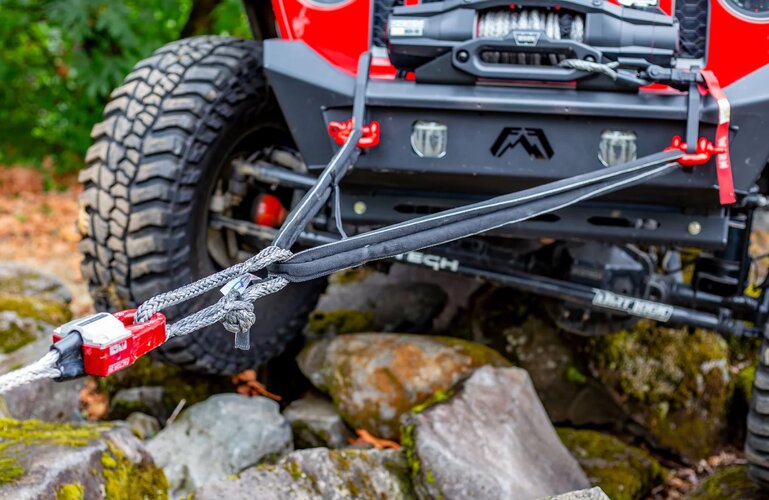
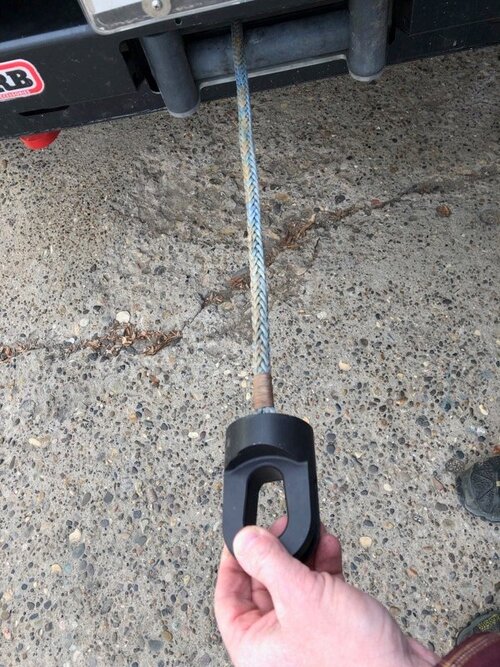
After my earlier post I spotted these also on Factor55’s web store. A 10’ bridle, this one rated for my needs. But a “Kinetic Energy” bridle? This seems like an accident waiting to happen if anything fails while winching.
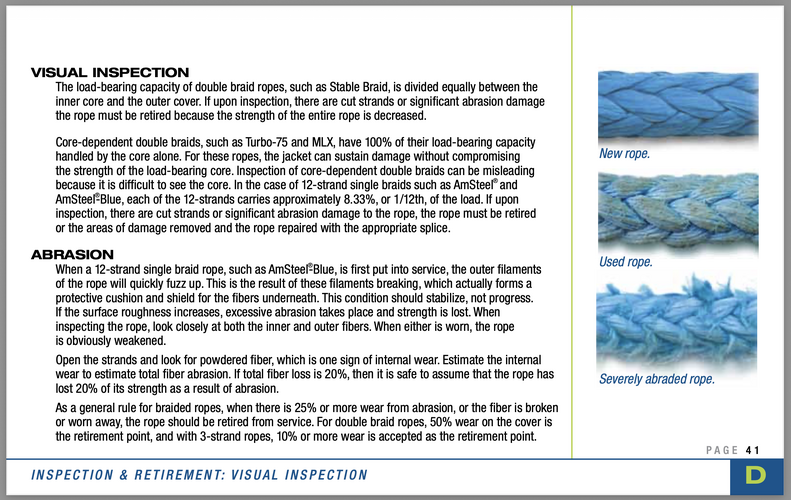
Designed for Jeeps, Mid-size trucks, CUVs, and SUVs. For vehicles with a gross vehicular weight between 4,000 - 6,500 lbs. Factor 55 double braided nylon recovery rope can stretch up to 30 percent of its total length. It also features a flexible, durable, weather-resistant polymeric coating for...

www.factor55.com
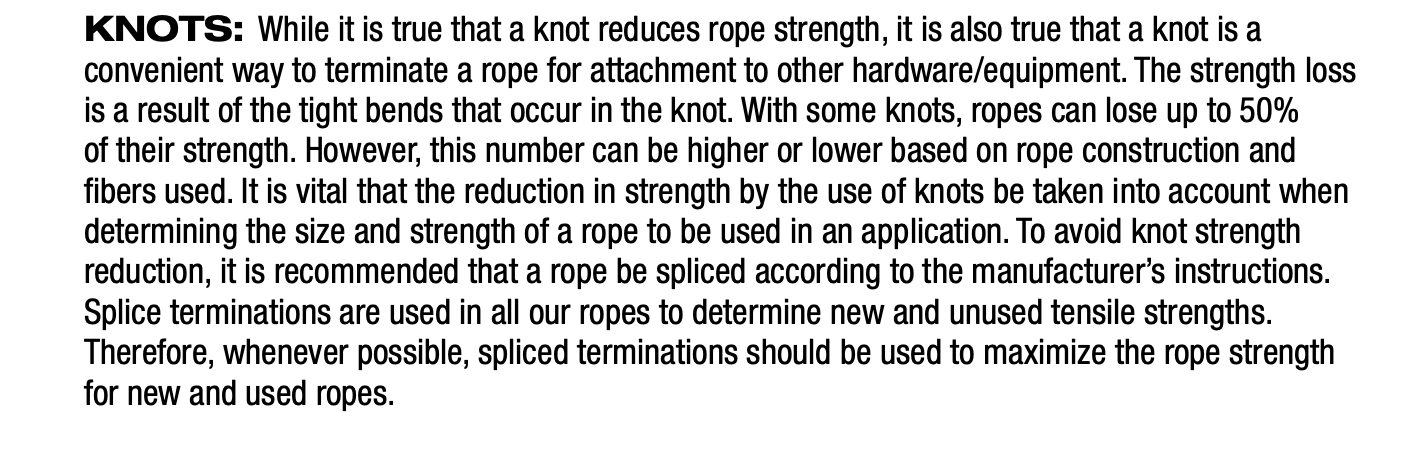
Understand that from a safety perspective how rigging is rated (such as ASME B30.9 that covers slings, what we call straps) makes no distinction between polyester and nylon in terms of synthetic slings. The working load limit is still determined by using a 5:1 design factor just like rope and shackles.
The amount of stretch is irrelevant in terms of safety. Rigging manuals may warn that using nylon rather than steel or polyester require different procedure due to the
intentional choice. They're talking about things you lift may bounce or you'll have to check hold downs more often. This is the trade-off for using nylon to reduce jarring. When used per WLL a nylon sling isn't stretching much, enough to cushion.
How we use nylon straps and ropes "dynamically" is a grey area. We're making a choice to use a piece of equipment that could be
under rated (per industry WLL) by choice to take advantage of its stretch characteristics. Reputable suppliers will still give you the breaking and
suggested WLL that is not per industry standards, typically about 3:1, so that it does the function. This is usually based on GVWR and can't account for friction, velocity and acceleration, so it can only be a guideline.
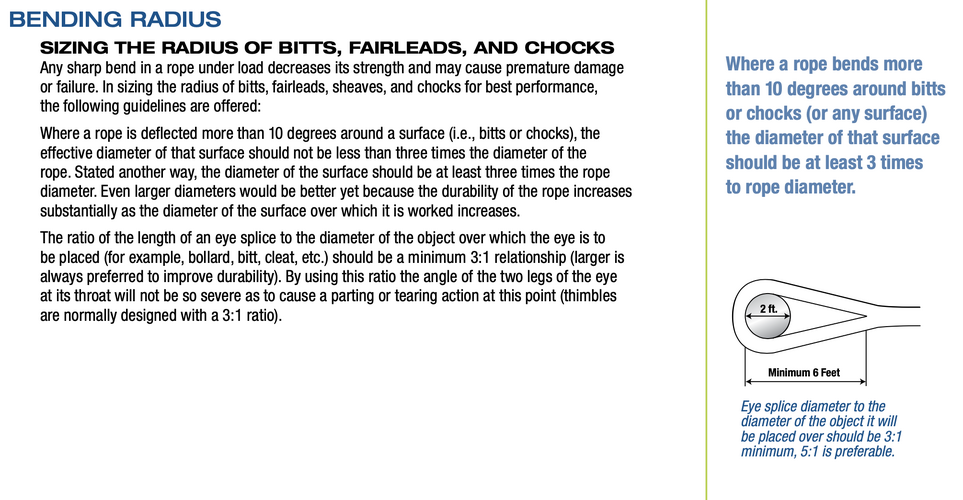
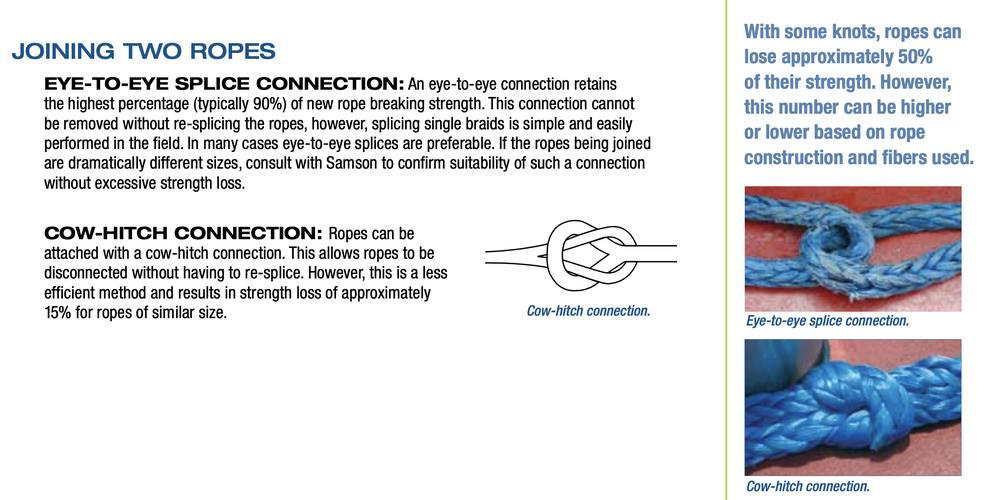
Notice that Warn/Factor55 is doing 5:1 for a 7/8" rope by calling it WLL 5,660 lbs. It will not stretch 30% at that WLL. For a bridle that's not a bad choice. You have a double leg sling (if the bridle is long enough to achieve 60° angle you are into 2x choker rating and that gets you to 170% the single leg sling WLL) with each end on a closed tie point (presumably), minimal stored energy (not much stretch) and the cushion is actually reducing force peaks from the winch rope. So the risk of something going far or fast in a failure is small and the benefit is worthwhile.
Climbers operate in the same grey zone with dynamic ropes we use for lead climbing. In that case the dynamic nature is actually critical to reducing the potential to injure people. A rope that
does not stretch enough can be so abrupt in a fall to break necks and spines or cause internal organ injury.
The gear climbers use is basically the same as arborists and SAR. Those users have ropes and other gear that is substantially heavier because of this. They do not operate close to margins. But they also don't take the same risks. They'd never climb above an anchor point or have a slack rope like recreational climbers do. In cases where they might, like fall protection for workers or via ferrata, there is a specifically designed shock absorber that tears apart to reduce force. This is a fuse, it works once. Climbers have those, too. Like the Yates Screamer.
In 4WD we get away with being in the margin because we're just amateur, individual dudes.
I've occasionally wondered how a professional company can offer to recover you with a yank like some of those guys on Youtube. Wouldn't they be subject to some sort of best practices, tow truck licensing, OSHA and liability?