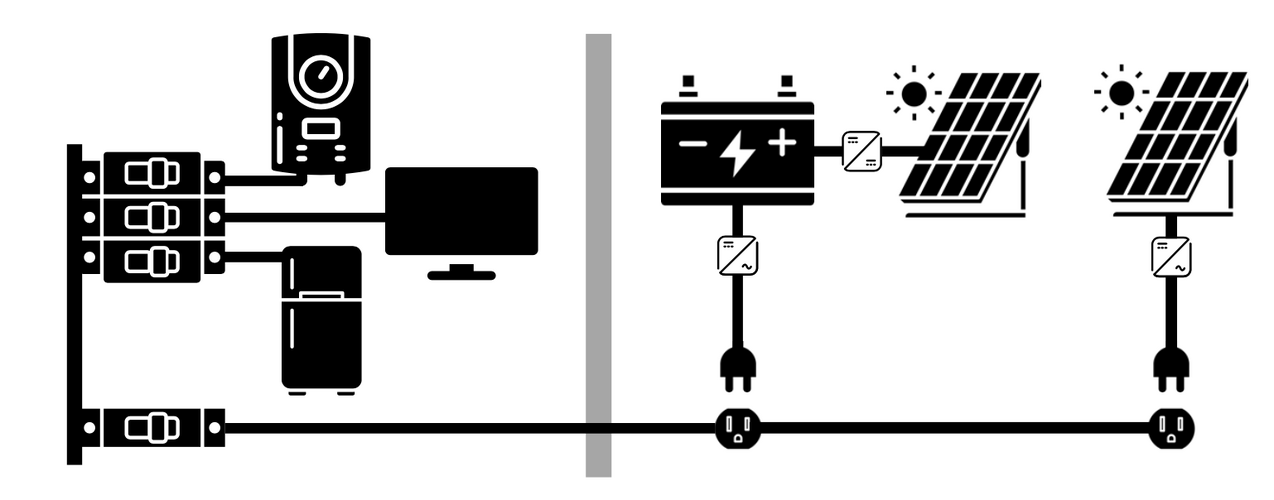
Just actually did some continuing education hours on distributed energy, of which the plug-in solar is a subset.
Far be it from me to defend Xcel. Pretty ticked at them right now. They ARE greedy.
That said there are real concerns North American utilities bring up. One is islanding, which is where energy is backfed to the grid when the linemen expect it to be dead. Normal solar, like any grid-tied backup be it a generator or otherwise, has the service entry transfer switch to prevent this.
These things plug into an outlet and unless you flip open a breaker upstream the power is put back down the line. This is dangerous, not to mention you might try to power your neighbors in a black out. That should cause an over-current on a balcony solar and the UL certification will help with the anti-islanding through a bidirectional GFCI.
Their worry is what if someone buys some POS from Amazon that isn't really UL 1741 compliant to prevent this?
The other concern is touch proof plugs. In Europe they use the round Schuko outlets that are recessed so the prongs are not easy to expose. We use the NEMA type plugs that aren't touch safe when the plug is energized. Their design intention was the blades get de-energized if the cord is pulled even slightly from the outlet.
Also, what about when it's not plugged in? Can the plug prongs become hot if the panel is exposed to sun? This is the same situation where people make a double male plug extension cable for their generators. This is disallowed in the NEC, specifically Article 406.7(b) and 406.7(d), because it's easy to shock someone doing that.
The UL standard tries to address this as well with the GFCI requirement. You'll still feel the tickle if you touch the prongs but it
shouldn't be fatal.
So one of the things the NFPA and UL are pushing for is requiring a touch-safe outlet panel you plug into in your house instead of a NEMA plugs.
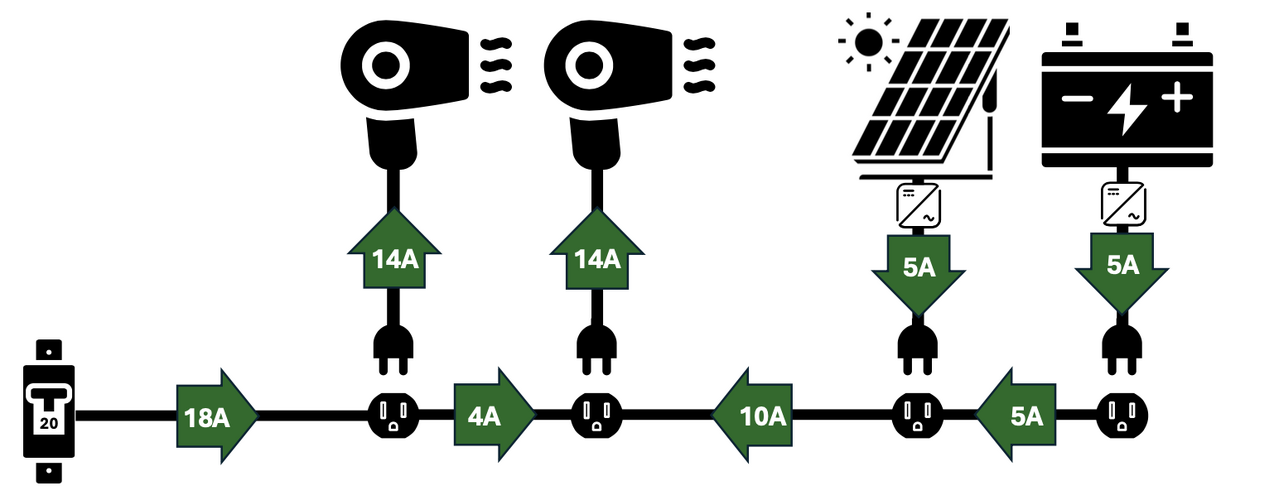
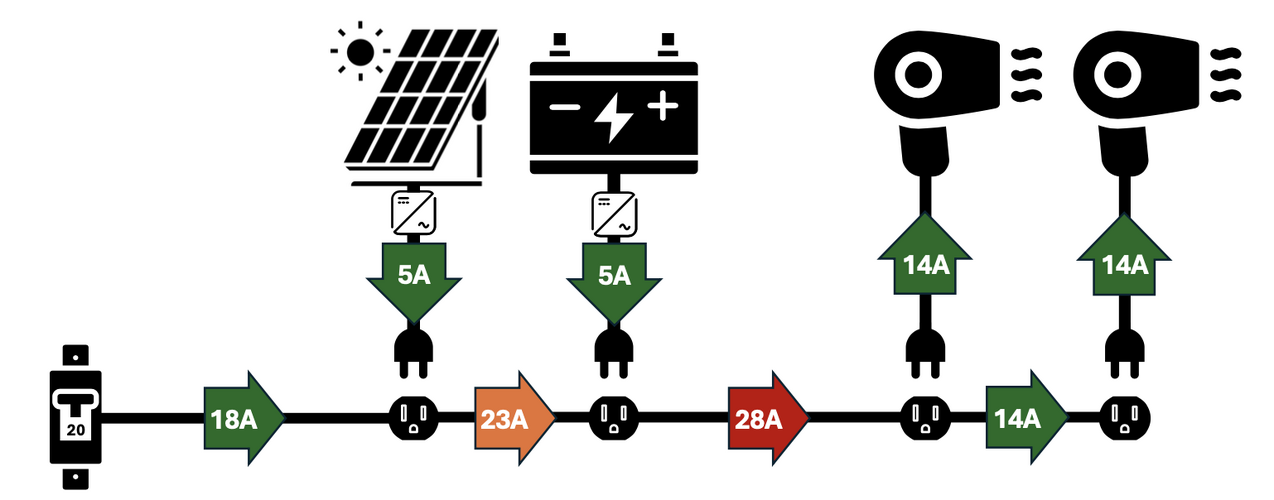
Another issue the codes are concerned with is breaker masking. This is where you put both a source and load on the circuit that bypasses the panel breaker. The way our wiring is done is the power path is grid -> meter -> main breaker -> panel breaker -> wiring -> outlet -> load. If you plug a source into a wall outlet and then run a load on that same circuit the panel breaker is not in the circuit. It only is if you run a load on a different circuit, in which case you actually have two breakers in the circuit.
This problem is present when it's operating normally. If you put the source upstream of the load then you could have both the panel power and generator source supplying downstream loads. There really isn't a good way to prevent this and whether it's safe is going to depend on the layout of the circuit.
It's shown in these graphics, the 14A loads being hairdryer as an example.
This first one is safe.
This second one could cause a fire in someone's wall.
I think what you're going to see is the NEC address this by having a dedicated branch circuit for a portable solar/inverter/generator. It might require a special plug (addressing touch safety) and being dedicated it'll have a breaker in the panel to prevent masking.