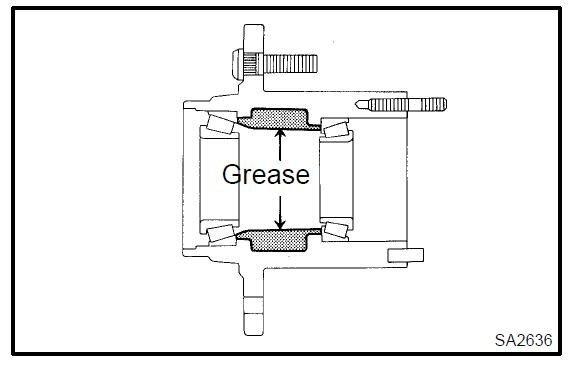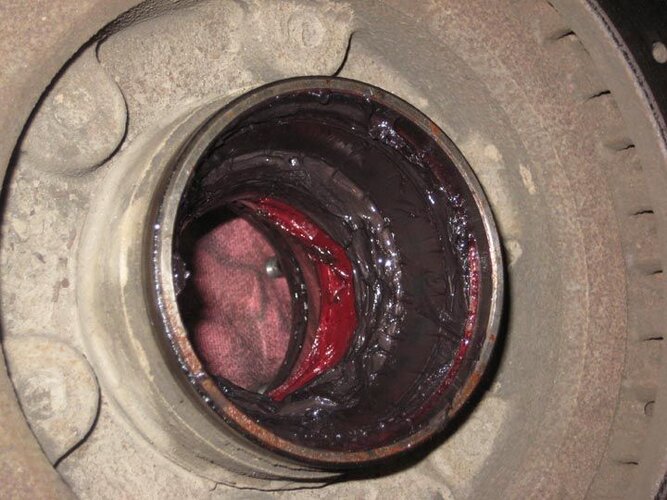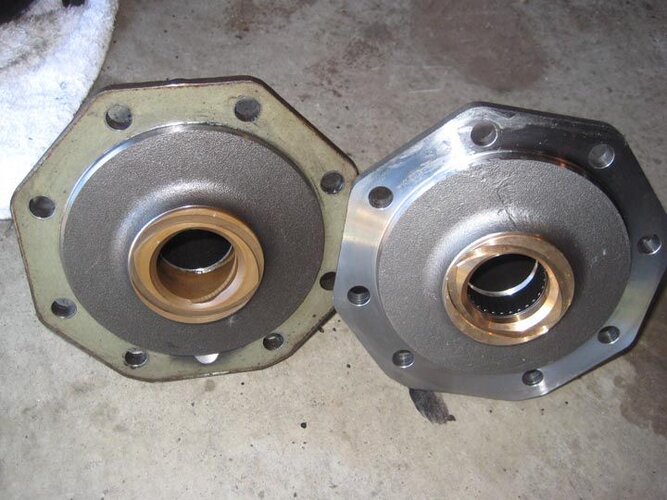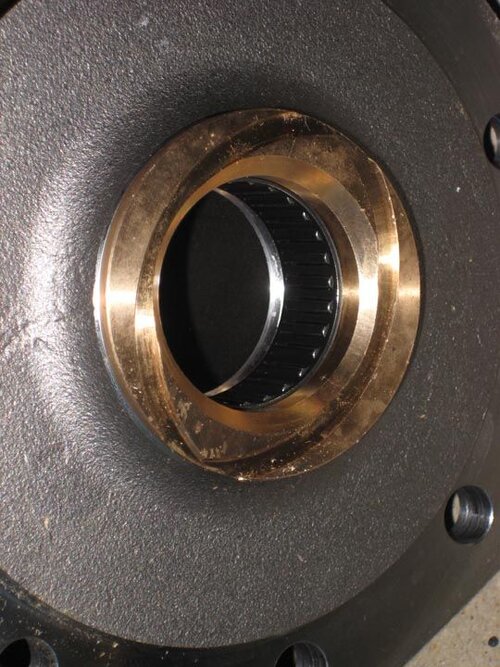

Hmm, ok. So tell me this- I've got a greasy bearing spinning in a closed cavity, with an inner diameter that's larger than the bearing. Wouldn't the mass of the bearing grease migrate towards the outermost portion of that circal, via centrifical force when the whole thing turns into a little tilt-a-whirl? Isn't there some sort of law of equilibrium that says areas of greater concentration will migrates to areas of lesser concentration? One of Newton's laws, perhaps..
So if I pack a bearing full of grease then put it right next to an open air space, then spin the thing for say 10,000 hours, what's keeping that grease in the bearing from not oozing over to the more attractive and higher gravitational-pulling air space? And then when all is at rest, what could possibly make that grease travel back uphill back to the bearing?
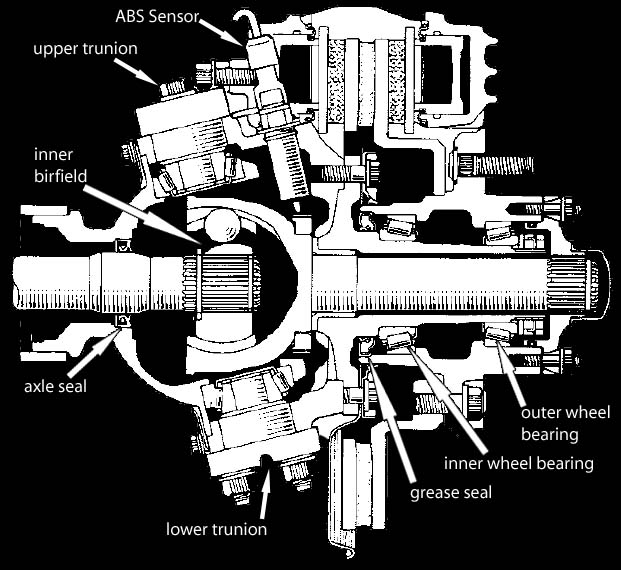
So filling that cavity up with grease to me insures that more grease stays in the bearings, since there's no where for the grease in the bearings to run to when things start spinning. I'm still open to arguments though, I haven't repacked either side yet..
Who can argue with Newton? Notice which way the tilt of the rollers are? That is why there is a flat metal retainer washer on the outside of the spindle and a seal next to the bearing on the inside of the spindle. Like Newton suggests liquid does not travel up hill! Although gearlube does defy the basic principle as it clings and climbs....but thats a different argument.