I'm in a remote part of Northwest Colorado at 8700-ft elevation, located at the end of a steep ridge, about 25-miles South of the Wyoming border and the Continental Divide. I'm not at the end of the Earth, but I can see it from my property.
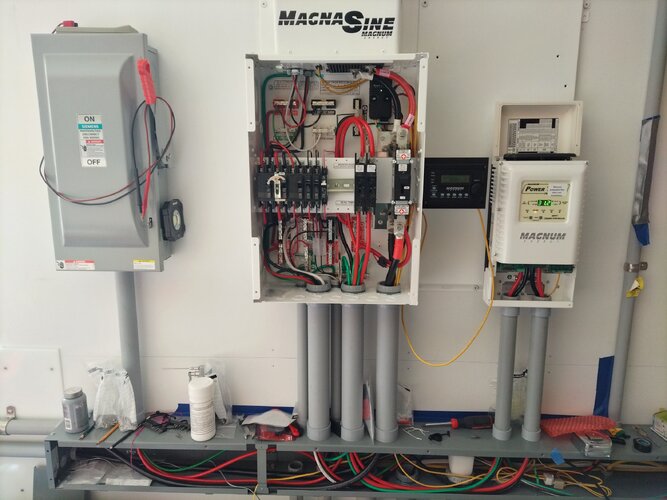
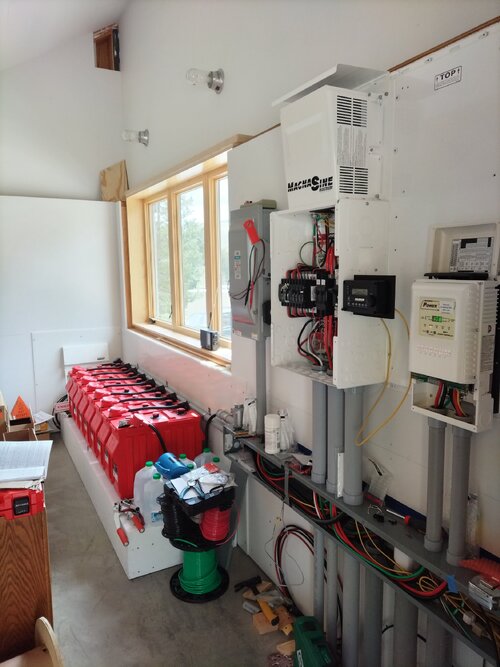
As stated earlier, my battery plant is a 568-Ah system at 48V. There's 15-each 310W panels which equates to 4650W of PV. My inverter provides 30A of 120/240 service to the house. I have the capability to expand the system by adding another inverter to provide 60A of service. Actually purchased another spare inverter. My original plan was to build a garage/workshop, and live it in while I build a bigger house further up the ridge. Unfortunately, between nobody wanting to work, except contractors who either charge a small fortune, or are unreliable and do poor work, cost of materials, lack of materials, etc. (Read Covid epidemic). In addition to feeling like this project has taken 10-years off of my life, I decided to turn the garage/work shop into my residence (now a 1200sqft one bedroom/bath home with a very small kitchen.), and put the house project off until I win the Lottery, and can afford to get the best labor and materials that money can buy. I didn't skimp on anything already built, and I'm the type that over-engineers everything I do. No expense spared there.
As far as a separate battery house goes, several reasons... having dedicated space in a residence for batteries (NEC/NFPA) requirements puts more hoops to jump through. Also having two separate buildings to feed, it made more sense to do it the way I did.
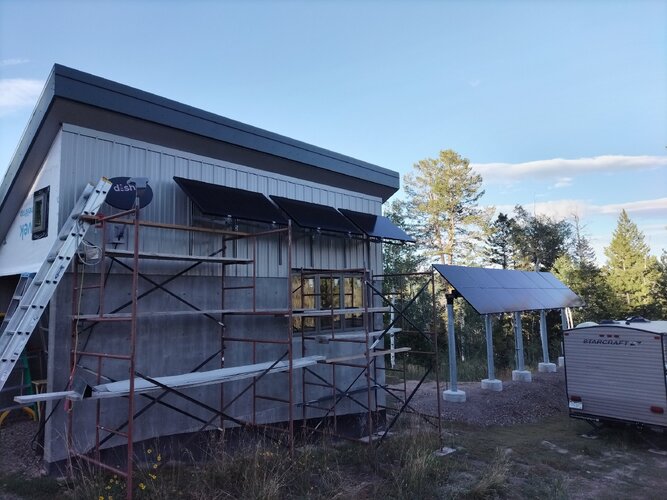
As far as the PV panels on the roof, in my opinion, you would never put PV panels on a roof unless it's your last resort, and then I would start question it. There's so many problems associated with putting PV on a roof, especially those mounted flat on the roof surface. My roof is a 7/12 pitch (approximately a 32-deg slope) on both buildings. With the amount of snow we get in Colorado, it not practical, and sometimes impossible to be trying to get snow off the roof mounted PV, and waiting for it to either slide or melt off would not be something you want to rely on if all your electric needs are tied solely to a PV system.
I laugh at all those new houses in Golden that have panels on their roofs with slight incline, with many facing North. With many buried in snow half the Winter. Some genius was really thinking there. I guess looking good, and feeling good about the environment is more important than practicality?
Look at the rest of the World, nobody, even in Third-World nations puts PV on their roofs unless it's mounted to a secondary rack system. ...and Americans are supposed to be smart.

As far as Wind, I thought about supplementing my PV with wind but I just don't have the sustained amount of wind to make it cost effective. They say you need an average constant of 18+ mph wind to make it worthwhile. Again, I laugh at all these people who put up wind turbines, and every time you drive by their house, it's rarely spinning. Another feel-good, but meaningless process in the works.
Last note, because of my battery house not being climate controlled, other than radiant energy from the sun in the Winter, built with a thermal mass wall on the inside, and highly insulated (R70 in the ceiling), even stays cool in the Summer never exceeding 70-deg. I decided to go with Flooded Lead Acid Batteries because of their lifespan (20+ years), and tolerance for cold temps. Lithium is becoming very popular for PV system storage, and has some benefits like faster charging, but their long-term reliability and lifespan still hasn't been proven for PV storage. One of the downfalls of Lithium, you need to place them in a climate controlled environment, because they are not efficient when cold, will shut down at a certain temperature, and can even be damaged by cold temperatures.