Do you really need the LSPV on a lifted 80? Correct me if I’m wrong, the load sensing is supposed to shift the braking to the rear when the vehicle is loaded? With a lift you need to raise the rod higher to equalize braking pressure front to rear. By raising the rod with a lift does that not shift the braking proportionally to the rear anyway?
The LSPV, as it worked on mini trucks anyway, is supposed to modulate the amount of braking the rear does as the cargo increases, which is assumed to cause the rear suspension to compress, pushing the rod up.
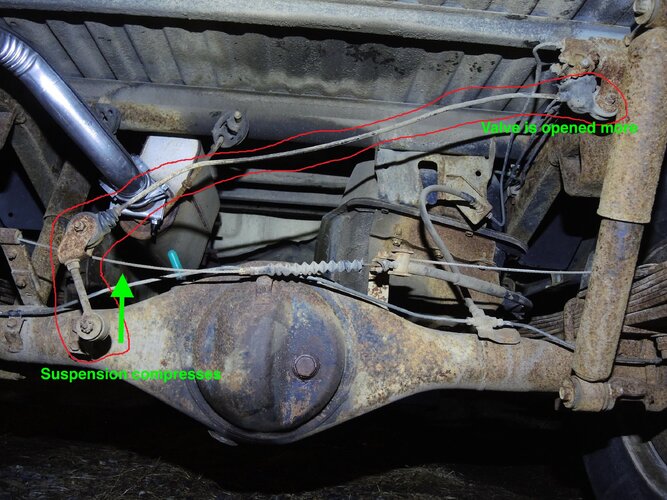
When you lift but leave the LSPV untouched it does the opposite, makes it seem like the rear is unloaded even more, essentially rendering the rear brakes 100% off.
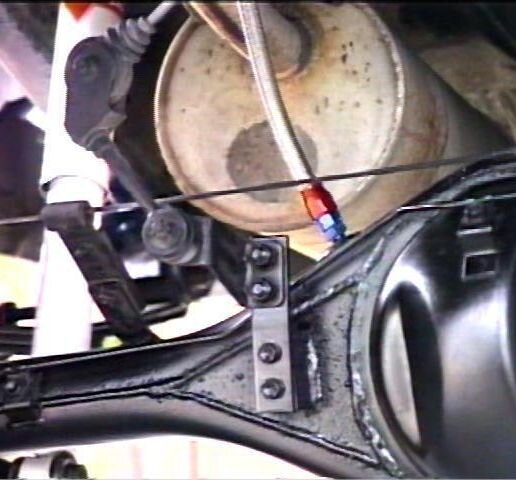
The idea with the bracket is to raise the rod the same amount as you lifted, which is supposed to put you back to the original geometry.
It is my observation that a few things are in play here.
First is that most people's LSPV wasn't set right in the first place. Or not functional, blocked or otherwise just not working. Or moving the rod that for years sat mostly in one spot probably let loose dirt and rust that's built up inside that valve.
Second is that even if it was working right this offset is only approximate and you 99.9% of the time aren't getting this
exact amount of lift.
The procedure to set the rod in the FSM has you using front and rear pressure but most of us drive on a dirt or gravel surface and find the rear lock up point. It's a pretty rough way to do it but it works to find a starting point from whence you tune the rod height. Even done right the whole system is pretty vague anyway.
You don't absolutely need the lift offset bracket if you have a moderate lift the rod may have enough threads to work per the FSM procedure. Or you can bend the rod itself as an alternative.
It was my experience that the lift bracket does work but you can't assume the LSPV was working right to start. I never really had much beef with the system and the bracket once I got everything flushed and set that LSPV rod correctly with the bracket in place.
My main issue with it is that it assumes you're on flat ground. As the axle articulates the LSPV gets cycled so your rear braking goes from zero to full on. I think also what can happen is if you have the brakes applied as you flex the rear brakes could get a mini line lock in back until the valve is opened again.
The problem here is you can't eliminate the LSPV because you do need to have some way to proportion the front/rear bias. You can do the inline valve to set it and it will work fine but in the case of a pickup where you might really have a wide range from very light bed to fully loaded using the suspension squat works as a pretty good way to adjust the bias compared to tweaking the knob on a valve. So I just left it and worked within the limitations. On an 80 or a dedicated 'crawler where the cargo and passengers are more predictable the LSPV is probably more trouble than it's worth, though.
If I were to have a rule of thumb it would be if you have fixed rate rear springs and rarely find yourself on the bump stops on the road you can punt the LSPV and do a valve.
If you have progressive rate springs, as in the case of a leaf pack with overloads for example, and use them fairly often then do the work to get the LSPV system functioning well.
Edit to add: I also need to point out that mini trucks and Tacos had drum brakes until 2024, so the LSPV isn't going to be touchy or obvious in operation. I personally like drum brakes from a utility standpoint and having a really good parking brake is a benefit. I imagine rear disk brakes plus a LSPV might be a step up in headache to find the Goldilocks setpoint.
There's also the question of how much the rear suspension articulates. On a leaf-sprung pickup you get much less stuff and droop compared to a coil sprung 80. So the region through which the LSPV rod moves the valve is smaller, when you set it it tends not to bang off extremes.