


Glen
0
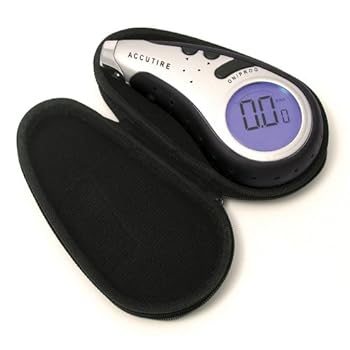
If you don't feel like reading, Accutire was the most accurate gauge. One place you can buy them is on Amazon for $15.99 plus shipping.
Analog dial gauges were 2nd. The common pen gauge was the worst off showing as much as 7 lbs lower (showing 28psi) when a tire was in reality at 35 psi. The pen gauges also got worse when tire pressure was lower.
The long version:
Original posting Here
Part 1 of 3
Everyone talks about tire pressure but just how accurate are those gauges you use to measure tire pressure. I started out with a collection of 38 tire gauges (loaned to me)
Various sizes and shapes, some new and some very old. Also we tested some digital
gauges some cheap the others expensive. Our test was conducted at our aircraft maintenance shop and against a highly accurate calibrated air pressure standard. I took each gauge and measured three air pressures consisting of 25, 35 and 45 lbs.
All the testing is done and the results in Parts will be published at various times.
Part one consisted of the most popular tire gauge called the pocket or pen type gauge which cost anywhere from $ 1.00 to $ 2.50 range and they have a white plastic dial reading. I tested 5 new ones (Victor, Monkey Grip etc) that were purchased at nationwide chain and auto stores. Each of the new ones read entirely different pressures with the worst being as much as 6 lbs. lower at 25 lbs. While an exact duplicate gauge read 3lbs. lower at 25 lbs. The new ones where mostly 3 lbs lower at 25lbs but improved at the higher pressures of 35 and 45 lbs. There averages where about 2 lbs. at the higher pressures. I tried exercising the dial a few times by pulling it in and out and taking the readings again and some improved by as much as a lb. at the lower reading. I then test older gauges of this type 3 to 10 years and the results were worse in some cases. It seams the older the gauge the lower the accuracy and they are the worst at the lower pressure. Some were off as much as 8 lbs. By the way all of the gauges we tested read low except one and that had an obvious defect. I took the older gauges and sprayed the dial with WD-40 and exercised it about 10 times and then I went back and redid the test and improved the readings to that of a new gauge. One gauge was 7 lbs lower at 35lbs and after my operation the gauge improved to about 2.5 lbs lower. One gauge that was 10 years old had better accuracy than one that was 3 years old, but generally the older the gauge, the lower the accuracy of gauges of this type. You get what you pay for.
In conclusion. If you want 30 lbs put in the air till your pen type gauge reads 28 lbs. and don't forget to exercise the dial a few times before checking the tire pressure. On the older ones spray the dial with WD-40 or some silicone lube and exercise the dial about 10 times. The average after we got them working was about 2 lbs. low Part 2 deals with more expensive gauges with some surprising results until then-by
DCH
Part 2 of 3
Tire Gauge Accuracy In Part 1, we did an evaluation of the cheaper pocket or pen type gauges. Part 2 consist of the more expensive heavy-duty double-headed type of gauge. Price range is in the $5.50 to $13.00 range. Basically the same names as indicated in Part 1 and a few new ones like ACCU. Most were purchased at local retail and automotive stores such as Napa ,Advance etc. We also tested some Analog or dial type of a gauge. Since these gauges cost more, we expected more from them and they didn't disappoint us. Since these gauges have a much larger range than the cheaper pocket type, we had to expand our testing to the 100lb. range. These gauges were tested at 25,35,45, (lower range) 60, 75, and 90 lb. range, which we called the upper range. Some where brand new, some where old like over 10 years. The gauges with the metal type indicators read about 1 to 2lbs long over the short range and about 1 lb. long on the higher range. Long means that for a known source of air pressure 35lbs. these gauges were indicating 36 or 37 lbs. Exercising the indicators did nothing to improve the accuracy. As these gauges start to get old (6 years and above) they tend to get a little sloppy on the higher end indicating as much as 3 to 5 lbs. higher. The shorter range still remained accurate within 2lbs. The newer type replaces the metal indicator with that of a white plastic dial much like the cheaper pen or pocket type. Easier to read I guess. These type of gauges read differently over the ranges, much like the cheaper ones. On the short range these gauges indicated about 1 to 2lbs. short. So for 35lbs. they would indicate 33 to 34 lbs. On the upper range they were very inconsistent with some reading 1 lb. short while others reading 1 to 2 lbs long, while down in the lower range they were all short. Exercising the indicators a few times improved some in the upper range but not in the lower range. Still overall the accuracy over both ranges was very good. The analog or meter type of gauges were very inconsistent but accurate. Some were short while some were long over the ranges and the brand didn't seam to matter. Two identical read differently. The 8 we tested were within 2 lbs in both the lower and upper ranges. Just remember to check to make sure the gauge reads zero before checking air pressure. Most come with an adjusting screw to do this. I dropped one on the floor and it indicated about 3lbs long. When in the first test, it indicated 1lb short over the ranges. After I zeroed the meter, it was ok. One analog type was reading all over the place as much as 8 lbs off. Here the meter had a static charge on the meter face. I rubbed a little Wd-40 on the meter face and it was ok after that.
The results show once again you get what you pay for. These types of meters showed pretty good accuracy over the ranges and age didn't seem to slow them down on the lower range.
Part 3 which consist of Digital Gauges will follow soon. One tested so accurate, I went out and bought one and tested it for repeatability and it indicated the same as the first. Which one was it? Stay tuned Until then---by
DCH
Part 3 of 3
The final report deals with the accuracy of Digital Gauges. We only had 8 gauges to test in this series, since most people use the gauges we tested in Parts 1and 2. Some of the brands we tested were Victor, Accutire, Majestic, and MG. Since these gauges had indicators up to 100lbs and more we tested them at 25, 35,45,and 50 lbs., which we called the low range. The high range indication consisted of measurements of 60,70, 85 and 100 lbs. All of the digital gauges tested were very accurate over both ranges. We caution you to read your directions carefully, since some of the gages required a self-calibration prior to using. If you don't calibrate them your reading can be off as much as 5 lbs on the lower ranges. The $6.00 gauges we tested were off only 1.5 lbs on the short range and about 2 lbs on the higher range usually 85 lbs. and up. The more expensive Gauges such as Accutire tested the best. The $14.95 gauge tested 0.5 lbs long on the low range and 1lb. long on the higher range. We tested the Accutire lighted background model $30.00 and it read perfectly in the low and higher ranges. It was off by 0.5 lbs (short) at 100 lbs. Every other pressure I tested it at read the correct pressure. I went out and bought one (Sears) and tested it for repeatability and it tested the same. Overall these gauges were very accurate and some do require a self calibration. They were all very easy to read. In time I feel more people will buy them. This concludes my report and I hope it was helpful.
DCH
Analog dial gauges were 2nd. The common pen gauge was the worst off showing as much as 7 lbs lower (showing 28psi) when a tire was in reality at 35 psi. The pen gauges also got worse when tire pressure was lower.
The long version:
Original posting Here
Part 1 of 3
Everyone talks about tire pressure but just how accurate are those gauges you use to measure tire pressure. I started out with a collection of 38 tire gauges (loaned to me)
Various sizes and shapes, some new and some very old. Also we tested some digital
gauges some cheap the others expensive. Our test was conducted at our aircraft maintenance shop and against a highly accurate calibrated air pressure standard. I took each gauge and measured three air pressures consisting of 25, 35 and 45 lbs.
All the testing is done and the results in Parts will be published at various times.
Part one consisted of the most popular tire gauge called the pocket or pen type gauge which cost anywhere from $ 1.00 to $ 2.50 range and they have a white plastic dial reading. I tested 5 new ones (Victor, Monkey Grip etc) that were purchased at nationwide chain and auto stores. Each of the new ones read entirely different pressures with the worst being as much as 6 lbs. lower at 25 lbs. While an exact duplicate gauge read 3lbs. lower at 25 lbs. The new ones where mostly 3 lbs lower at 25lbs but improved at the higher pressures of 35 and 45 lbs. There averages where about 2 lbs. at the higher pressures. I tried exercising the dial a few times by pulling it in and out and taking the readings again and some improved by as much as a lb. at the lower reading. I then test older gauges of this type 3 to 10 years and the results were worse in some cases. It seams the older the gauge the lower the accuracy and they are the worst at the lower pressure. Some were off as much as 8 lbs. By the way all of the gauges we tested read low except one and that had an obvious defect. I took the older gauges and sprayed the dial with WD-40 and exercised it about 10 times and then I went back and redid the test and improved the readings to that of a new gauge. One gauge was 7 lbs lower at 35lbs and after my operation the gauge improved to about 2.5 lbs lower. One gauge that was 10 years old had better accuracy than one that was 3 years old, but generally the older the gauge, the lower the accuracy of gauges of this type. You get what you pay for.
In conclusion. If you want 30 lbs put in the air till your pen type gauge reads 28 lbs. and don't forget to exercise the dial a few times before checking the tire pressure. On the older ones spray the dial with WD-40 or some silicone lube and exercise the dial about 10 times. The average after we got them working was about 2 lbs. low Part 2 deals with more expensive gauges with some surprising results until then-by
DCH
Part 2 of 3
Tire Gauge Accuracy In Part 1, we did an evaluation of the cheaper pocket or pen type gauges. Part 2 consist of the more expensive heavy-duty double-headed type of gauge. Price range is in the $5.50 to $13.00 range. Basically the same names as indicated in Part 1 and a few new ones like ACCU. Most were purchased at local retail and automotive stores such as Napa ,Advance etc. We also tested some Analog or dial type of a gauge. Since these gauges cost more, we expected more from them and they didn't disappoint us. Since these gauges have a much larger range than the cheaper pocket type, we had to expand our testing to the 100lb. range. These gauges were tested at 25,35,45, (lower range) 60, 75, and 90 lb. range, which we called the upper range. Some where brand new, some where old like over 10 years. The gauges with the metal type indicators read about 1 to 2lbs long over the short range and about 1 lb. long on the higher range. Long means that for a known source of air pressure 35lbs. these gauges were indicating 36 or 37 lbs. Exercising the indicators did nothing to improve the accuracy. As these gauges start to get old (6 years and above) they tend to get a little sloppy on the higher end indicating as much as 3 to 5 lbs. higher. The shorter range still remained accurate within 2lbs. The newer type replaces the metal indicator with that of a white plastic dial much like the cheaper pen or pocket type. Easier to read I guess. These type of gauges read differently over the ranges, much like the cheaper ones. On the short range these gauges indicated about 1 to 2lbs. short. So for 35lbs. they would indicate 33 to 34 lbs. On the upper range they were very inconsistent with some reading 1 lb. short while others reading 1 to 2 lbs long, while down in the lower range they were all short. Exercising the indicators a few times improved some in the upper range but not in the lower range. Still overall the accuracy over both ranges was very good. The analog or meter type of gauges were very inconsistent but accurate. Some were short while some were long over the ranges and the brand didn't seam to matter. Two identical read differently. The 8 we tested were within 2 lbs in both the lower and upper ranges. Just remember to check to make sure the gauge reads zero before checking air pressure. Most come with an adjusting screw to do this. I dropped one on the floor and it indicated about 3lbs long. When in the first test, it indicated 1lb short over the ranges. After I zeroed the meter, it was ok. One analog type was reading all over the place as much as 8 lbs off. Here the meter had a static charge on the meter face. I rubbed a little Wd-40 on the meter face and it was ok after that.
The results show once again you get what you pay for. These types of meters showed pretty good accuracy over the ranges and age didn't seem to slow them down on the lower range.
Part 3 which consist of Digital Gauges will follow soon. One tested so accurate, I went out and bought one and tested it for repeatability and it indicated the same as the first. Which one was it? Stay tuned Until then---by
DCH
Part 3 of 3
The final report deals with the accuracy of Digital Gauges. We only had 8 gauges to test in this series, since most people use the gauges we tested in Parts 1and 2. Some of the brands we tested were Victor, Accutire, Majestic, and MG. Since these gauges had indicators up to 100lbs and more we tested them at 25, 35,45,and 50 lbs., which we called the low range. The high range indication consisted of measurements of 60,70, 85 and 100 lbs. All of the digital gauges tested were very accurate over both ranges. We caution you to read your directions carefully, since some of the gages required a self-calibration prior to using. If you don't calibrate them your reading can be off as much as 5 lbs on the lower ranges. The $6.00 gauges we tested were off only 1.5 lbs on the short range and about 2 lbs on the higher range usually 85 lbs. and up. The more expensive Gauges such as Accutire tested the best. The $14.95 gauge tested 0.5 lbs long on the low range and 1lb. long on the higher range. We tested the Accutire lighted background model $30.00 and it read perfectly in the low and higher ranges. It was off by 0.5 lbs (short) at 100 lbs. Every other pressure I tested it at read the correct pressure. I went out and bought one (Sears) and tested it for repeatability and it tested the same. Overall these gauges were very accurate and some do require a self calibration. They were all very easy to read. In time I feel more people will buy them. This concludes my report and I hope it was helpful.
DCH
Last edited:


 If you are using CO2 and are worried about how accurate your tire gauges are you really need a life! All gasses fluctuate with temperature so just because you filled it to 35.276 # after finishing the trail doesn't mean it will still be at 35.276 +/- .001 after 20 miles of road travel!





