Are you wanting to relay the main high current feed or the control circuits?
I mentioned about winch fuses in that thread, which is usually discouraged. I would caution that I'm experimenting with them and
would not recommend my approach unless you know what you're doing and why.
If you're thinking about adding a big relay to cut the main power feed, that's what the control box is doing. You're not adding new functionality but are increasing the number of components and connections that may fail you.
The accepted practice here is to wire directly to the battery and do not change anything from the winch manufacturer. The way most winches are wired is exactly how your starter is wired (there's no fuse on your starter, for example). This works fine and is generally safe. In fact winch controllers usually have four solenoids (not all are required to operate to get the motor running, at least two though) while your starter only has one solenoid.
Going to a dash switch can be done safely but, again, I would recommend against that unless you understand the logic and can troubleshoot it yourself. When you're alone or in a group without an electrician you'll need to get it working potentially. One of the standard troubleshooting steps might be to try another person's winch remote and if you've modified your control circuit then you're out of luck.
What fails electrically on winch installs is poor workmanship and lack of maintenance. Second to that is the control circuit, whether that's wireless or wired, it's usually a short or break in the remote control circuit somewhere. Occasionally the big solenoids or the motor fail but that's less common and typically they will fail safe, in that they stop working rather than stick on.
That said it's
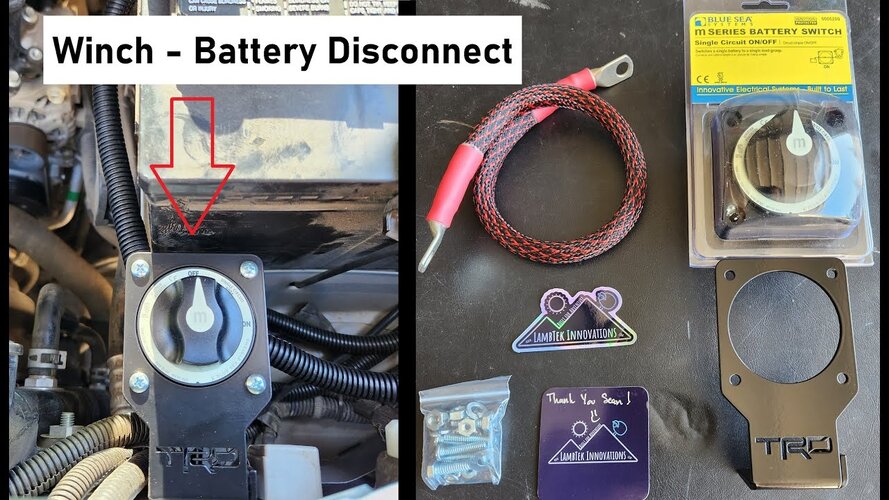
generally considered good practice to add a disconnecting switch. This is minimal parts and low risk, high benefit. The failure potential is corrosion in the switch, which can be alleviated with a good quality sealed switch, or having one additional cable and two lugs to fail. Worst case is if the switch becomes unreliable you can just move the feed from the switch directly back to the battery to bypass it.
Parasitic draws on winches with all wired controls is unusual. If there is one that would indicate an issue, especially if it persists with the remote disconnected. There can be a small draw on a wired remote if it has LEDs in it potentially, which would be eliminated by removing it.
A winch with a wireless remote will likely have a constant draw. Should be small but similar to perhaps leaving a phone charger on all the time. Some winches come with a power switch for this reason, to turn off a wireless receiver in it. In either case a big disconnect switch should kill all power so the only sneak path would be anything you added or changed from the manufacturer supplied cabling.