• REGISTER FOR RISING SUN'S 2ND BEST EVENT: THE COLOYOTA EXPO. IT'S ONLY $5, DUDE.
    → No extra fee to bring yer extra stuff and sell it at the swap meet.
    → It's not Cruise Moab, but it's way cheaper and you can sleep in your own bed.
    Businesses: Still time to register your company to be an exhibitor at the event, too!
    Click here to register today..

New shop equipment build: 8000 lbs capacity, adjustable height fixture table

Brucker

Hard Core 4+
Joined
Jul 10, 2013
Messages
1,125
Location
Broomfield, CO
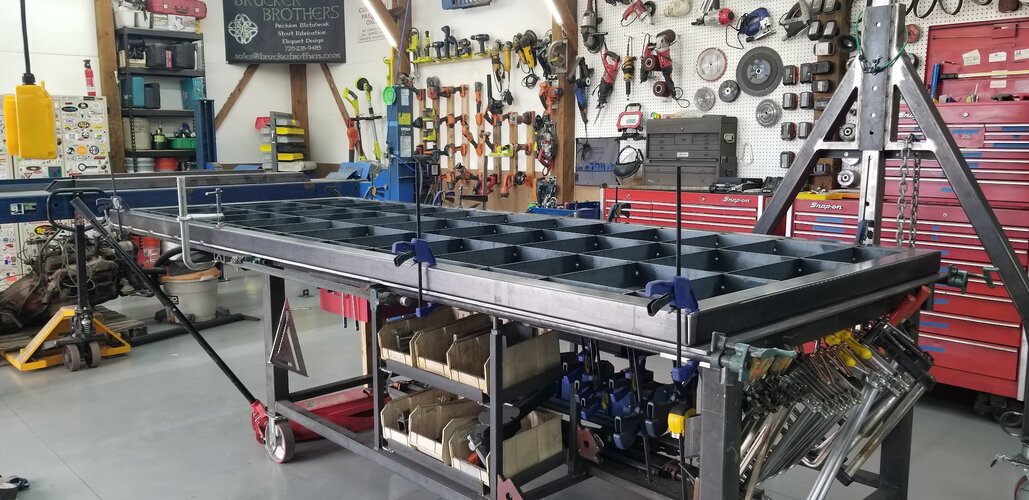
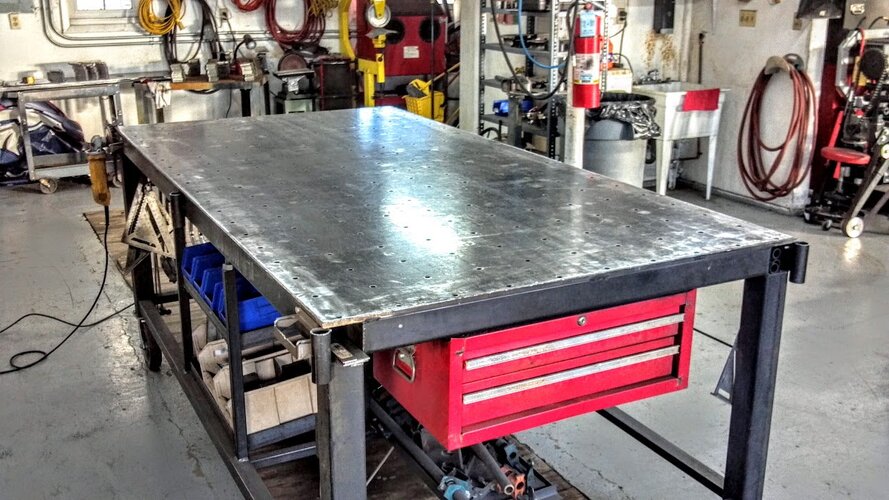
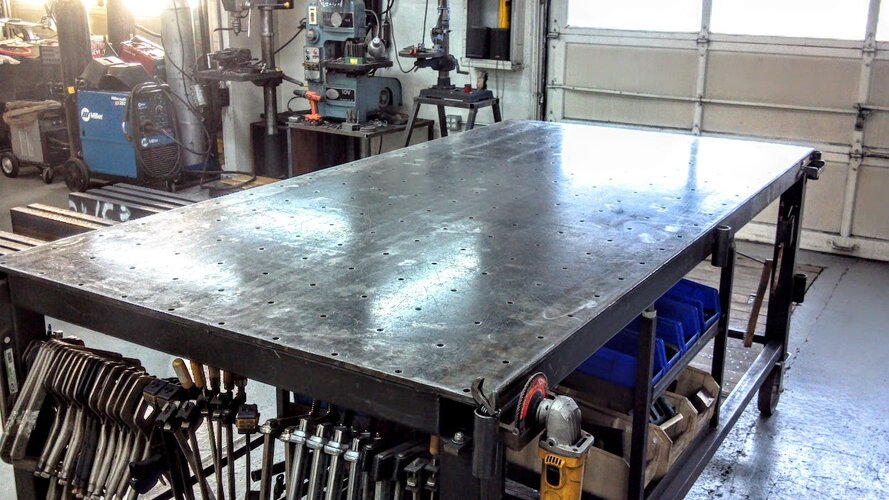
I built my first fixture table, though back then we just called it a fab table, in 2004. One couldn't find a fixture like you can now without spending 10's of thousands on an Acorn table. So I built one. Made out of 1/2" plate and 3/16" thick 3" square tubing. It is 4' wide x 8' long x 41" tall. And the top has a 5" x 5" grid pattern of holes that are tapped 1/2"-13. Mostly because the post style clamps that modern fixture tables accept didn't readily exist. So I went with what I knew, machinist/mill table clamps. I attached a small tool box to one end, and rods to hold C and F clamps on the other. The center has bins for fixtures and jigs. It has served me well for many years, and has taken all the abuse I have thrown at it. Nearly every project that has come out of my shop, from railings to complete chassis, has been on that table.
2015-11-21_15-29-04_249.jpg

2015-11-21_15-28-34_325.jpg

Through out the years, I have dreamed about building or acquiring another and what that would entail. It changed over the years, especially with the post style clamps and fixture tables becoming so readily available and popular. And as I got older, I started thinking more and more about ergonomics and how I could save my failing body. I really liked a couple different tables from a couple different vendors, and some even offered adjustable height. But none of them offered anything other than 5/8" or 16mm holes. And I have become accustom to using and really like the 1/2" tooling. So I went back and forth about buying and then modifying, only to ultimately realize I would have close to $30-40K into buying an adjustable height table, only to then have to modify it. That seemed like the best solution, so it got added on to the future equipment purchase list for the shop.

Then I stumbled onto this on FB marketplace:
627887361_1547924136860386_880570313608206041_n.jpg

588438919_1486699436316190_8227324354780725382_n.jpg

20260323_125659.jpg


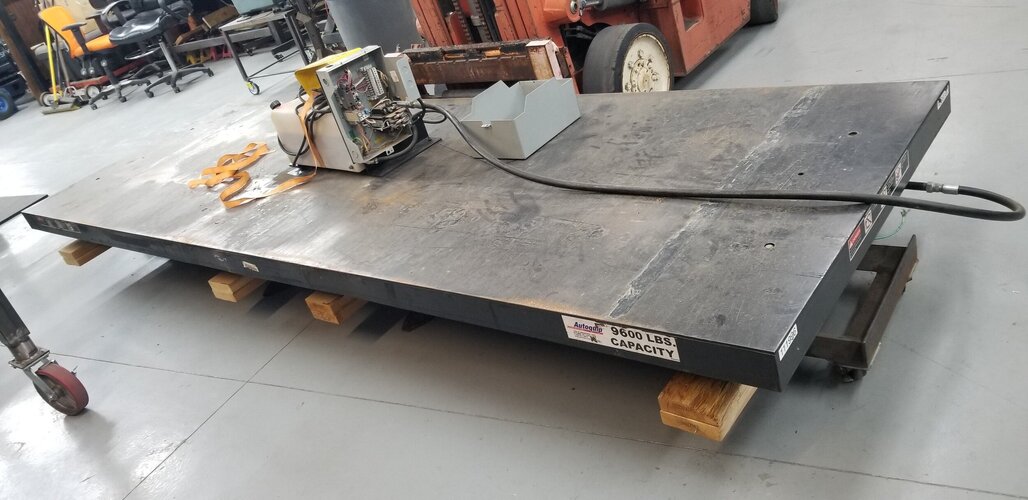
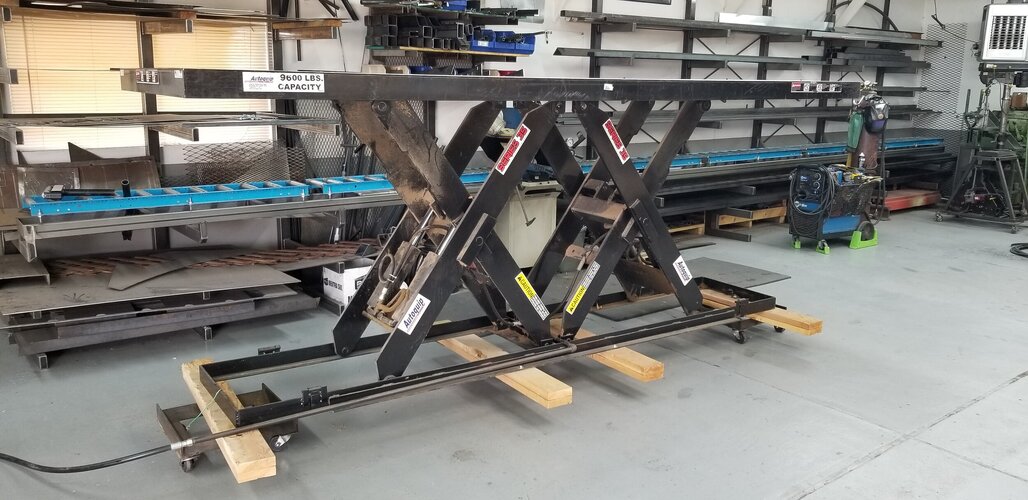
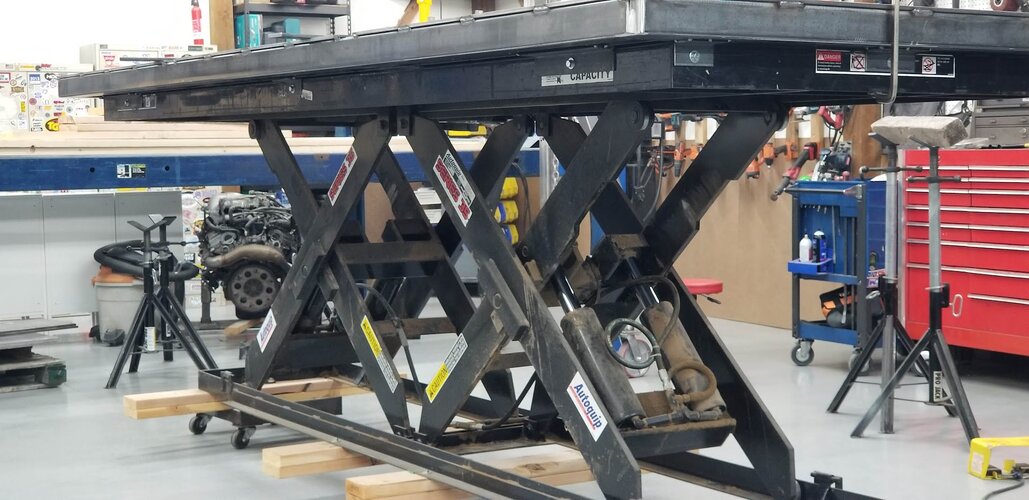
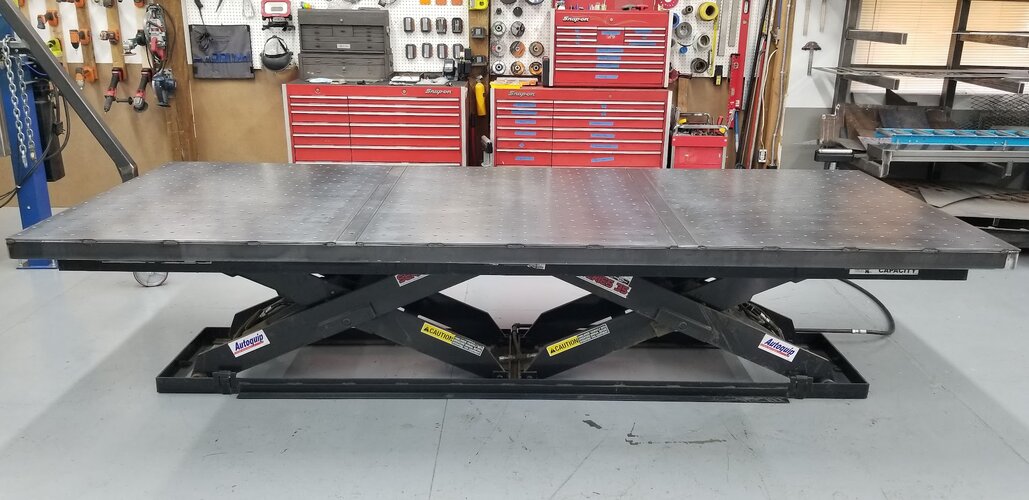
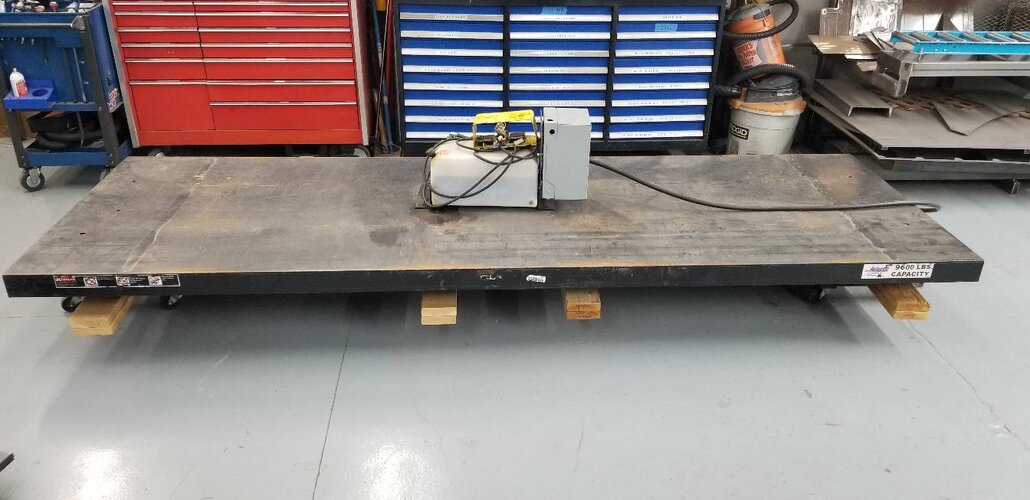
A 4' wide x 12' long dual scissor lift table with a 9600 pound capacity, that can raise from 7" high to almost 60" tall in about 30 seconds. New these table go for over $60k. I was able to bring this one home for under $3k. It was then and there I decided I would just build the table I wanted. So I got to mentally designing, then ordered materials, and got to work. I don't want this to take away any shop time from real work, so I will slowly be fabricating it during nights and weekends.

End goal, 8000 pound capacity, adjustable height fixture table, with an approximate 5' x 12.5' top. The top would be made of 3/8" thick plate, 3/16" thick 3" square tubing, and 1/4" x 3" flat strap. I would use three 3/8" x 4' x 5' plates plus two 3/8" x 3" x 5' wide plates to create the top surface. The 2 smaller plates would separate the 3 sheets, and will be removable. This will allow the use of standard C and F clamps within the tables perimeter. And the entire top will have 2 opposing 4" x 4" grid patterns. One with 16mm holes to accept both 5/8" and 16mm tooling and clamps. And one with 1/2"-13 tapped holes. This should allow for the most clamping options available.
 
Last edited:
Brucker

Hard Core 4+
Joined
Jul 10, 2013
Messages
1,125
Location
Broomfield, CO
I called around to get quotes for CNC cutting the plates. I only have access to CNC plasma cutting in house. And I really didn't want to add more heat into the top then necessary. So plasma and laser are out with that many holes to cut. So water jet was really the only option I considered. Until the pricing came back. So made the decision to do it all in house with mag drills. It's one I will probably regret later, but such is life. If you want something, you gotta work for it right?

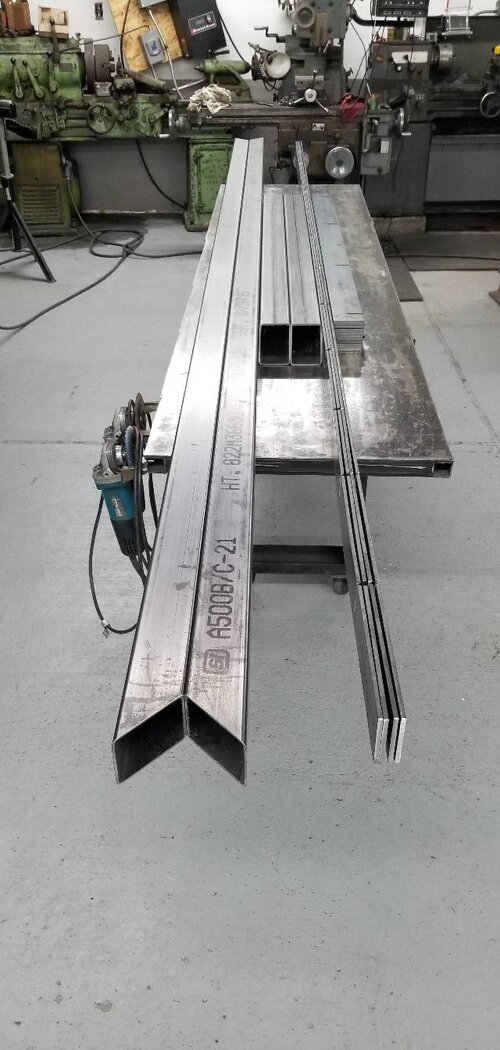
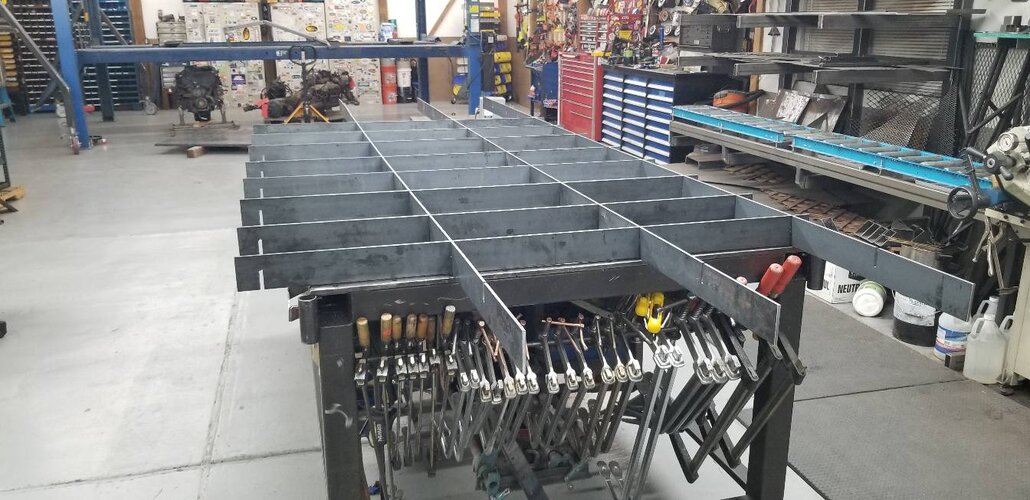
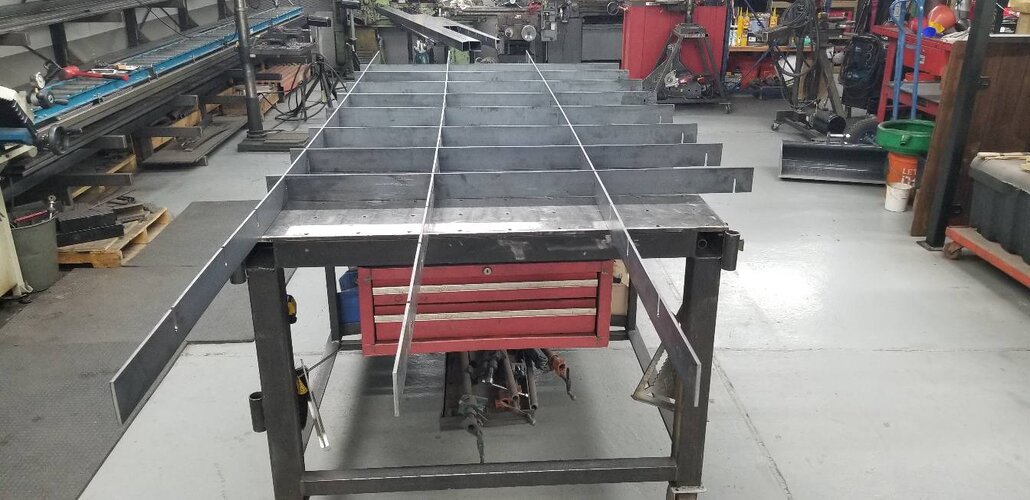
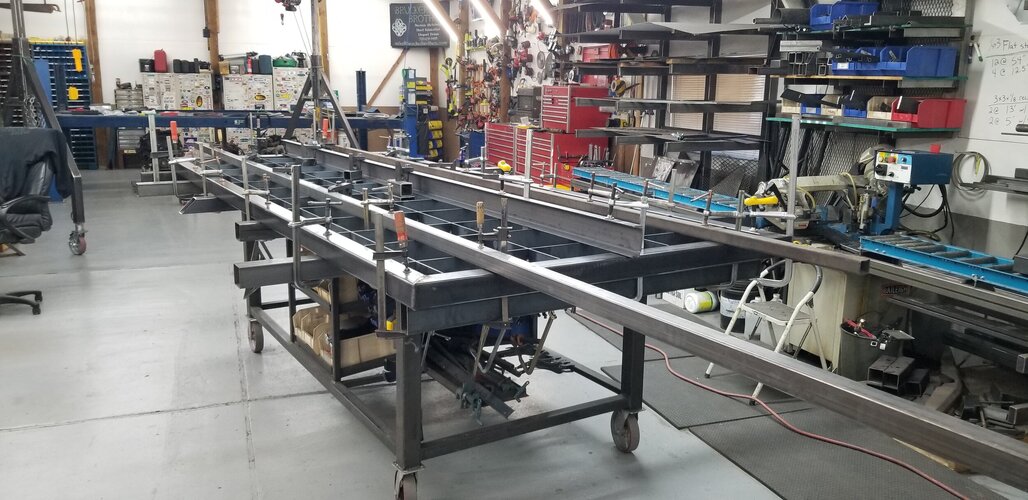
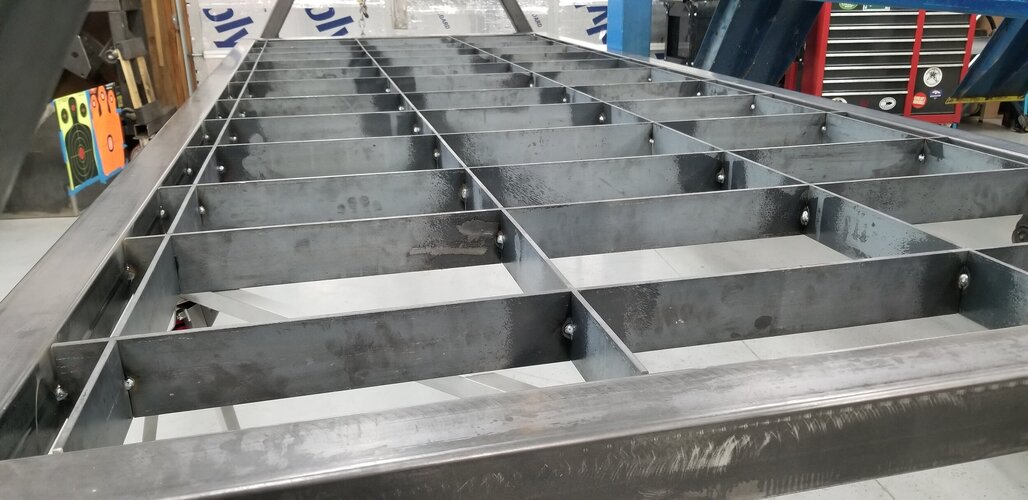
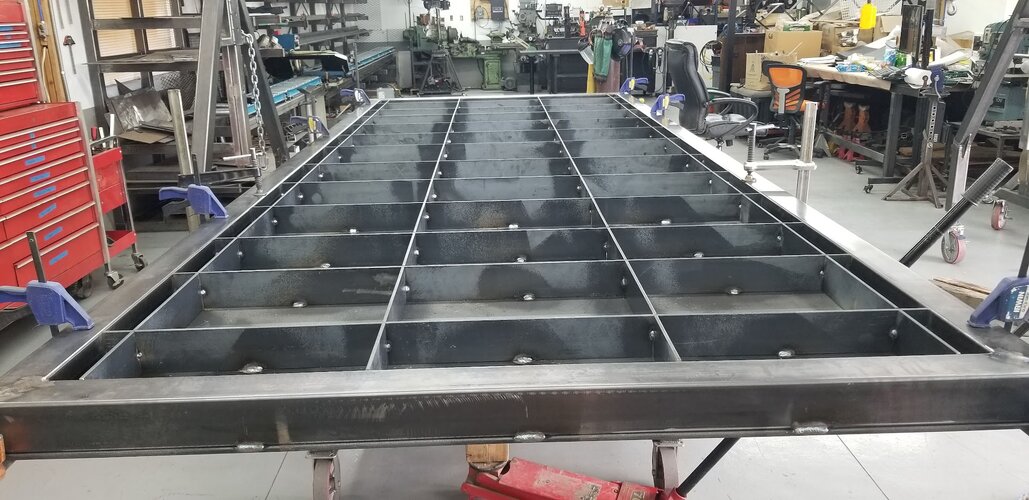
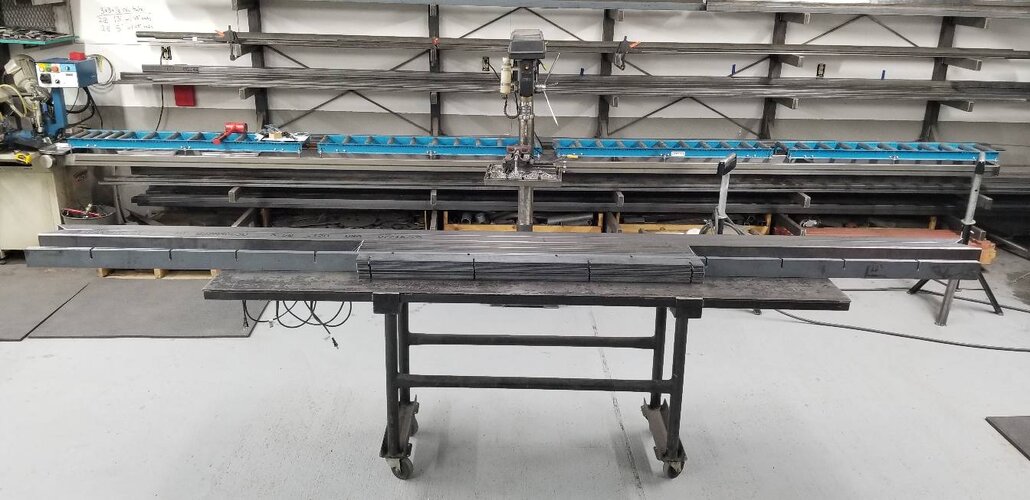
Once the materials arrived, I started cutting pieces for the frame. The outside would be 3" square tubing, and the middle would be filled with a grid pattern of the 3" flat standing on end. With the pieces cut to length, I cut slots into the flat stock so they would interlace together.

627856165_1547924280193705_8240417612837220179_n.jpg

630426692_1547924253527041_9133849102079033434_n.jpg

With all the pieces cut and cleaned up, I started fitting them together.

627663552_1547924306860369_6314144721424878808_n.jpg

631116291_1547924346860365_7346209536866242281_n.jpg

20260216_181031.jpg

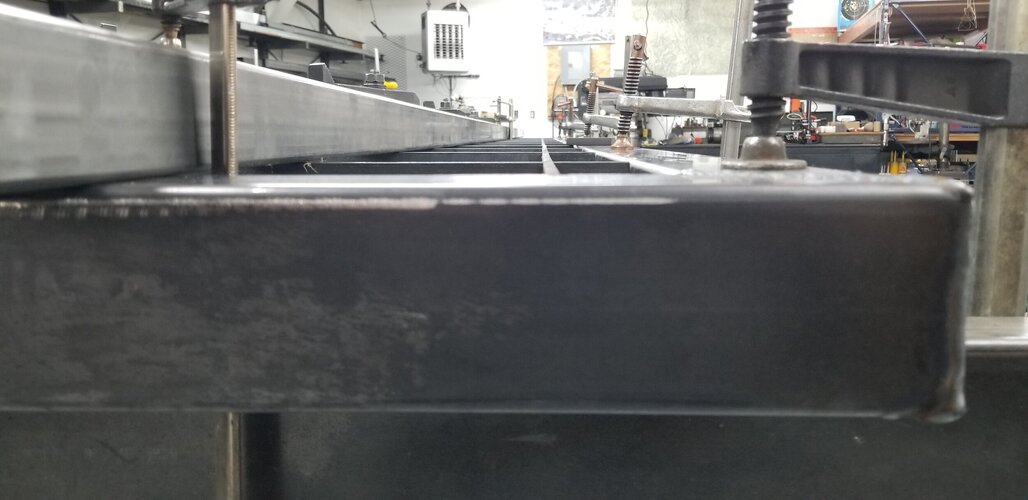
And welded the tubing together
20260216_181226.jpg

20260217_095944.jpg

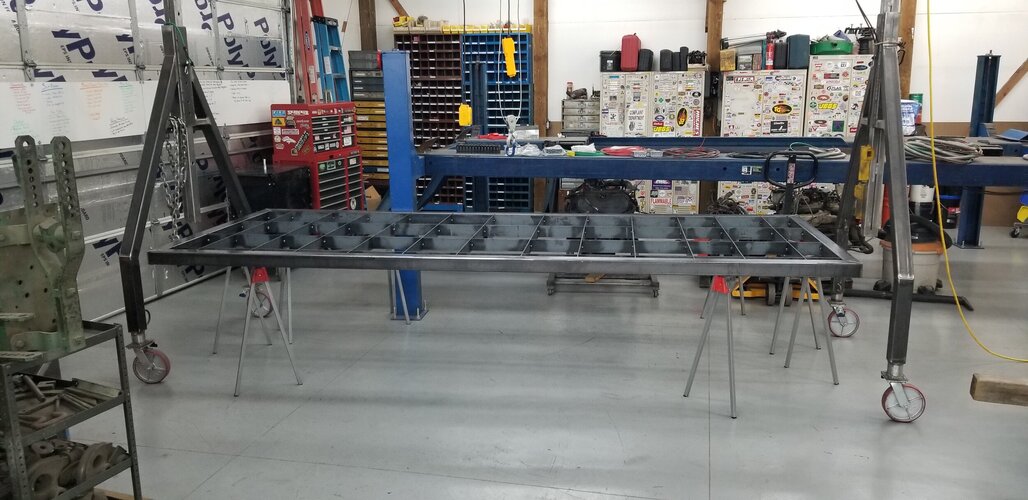
And then welded the two sections together ensuring the assembly is finished nice and flat

20260217_162617.jpg

20260217_165237.jpg

And then moved the completed assembly to the side

20260218_120804.jpg

20260218_120740.jpg
 
Last edited:
Brucker

Hard Core 4+
Joined
Jul 10, 2013
Messages
1,125
Location
Broomfield, CO
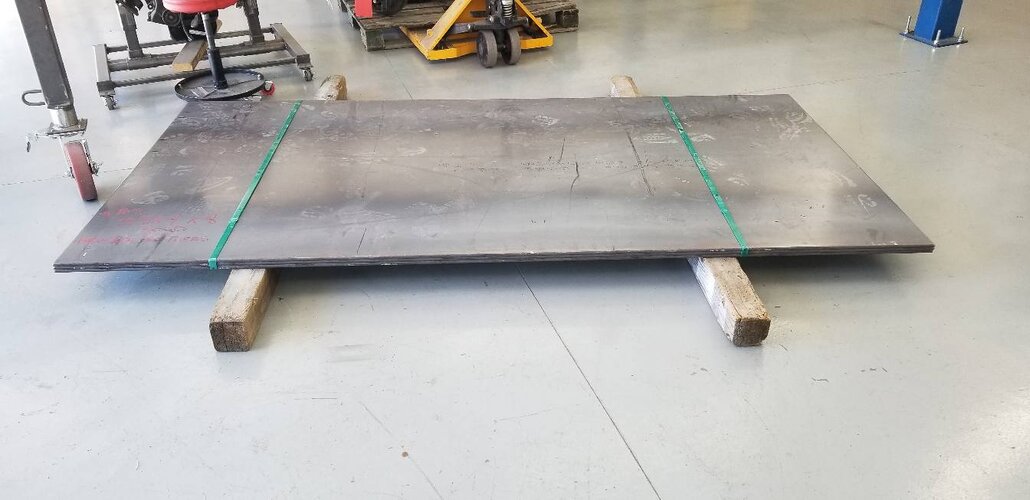
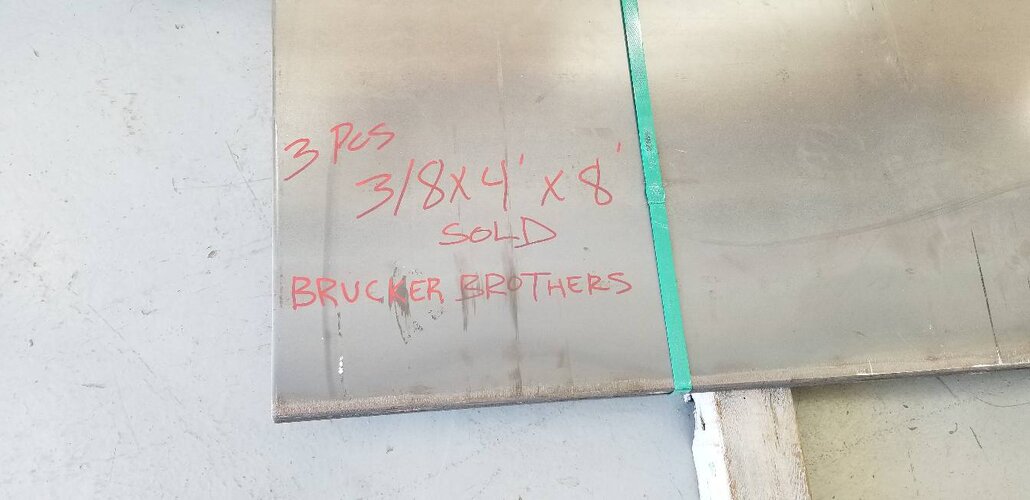
With the top's framework completed, it was time to process the plate. I ordered three 3/8"x4'x8' sheets. I will cut them down to three 4'x5'. Then space them 3" apart to create the 5'x12.5' top.

Plates as they arrived:

629446509_1547924173527049_3464129265892364105_n.jpg

627668905_1547924220193711_1170348110599225238_n.jpg

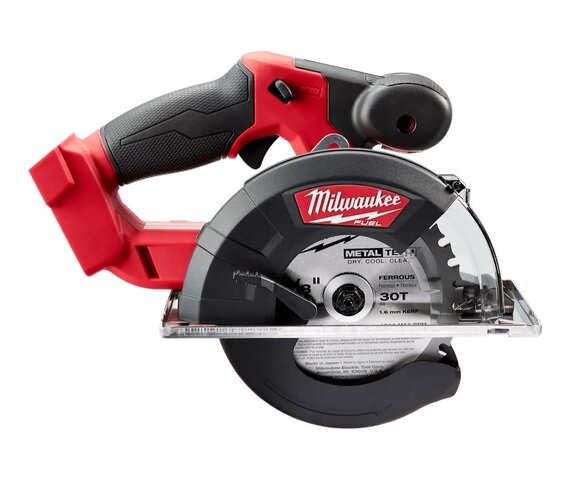
To keep heat at bay, I used one of my favorite cordless tools, a Milwaukee M18 metal cutting circular saw. I have found it is just as fast, if not faster, than plasma cutting when you take the clean up into account. And doesn't heat the material, create off gases, nor require respirators or special tinted glasses.

20260512_111540.jpg
When laying out the sheets, I realized that the "mill edges" were in great shape and were actually parallel. So instead of making 4 cuts per sheet, I would only make two. But this would make the table about an inch and a half longer than planned. This would mean I would either have longer overhangs, or I could add another section of 1.5" x 3" tubing to one end. This would mean one line of holes wouldn't be able to be cut as they would line up with a vertical wall of the frame. But this shouldn't matter as there will be plenty of clamps options still available. So I opted to go with the longer setup.

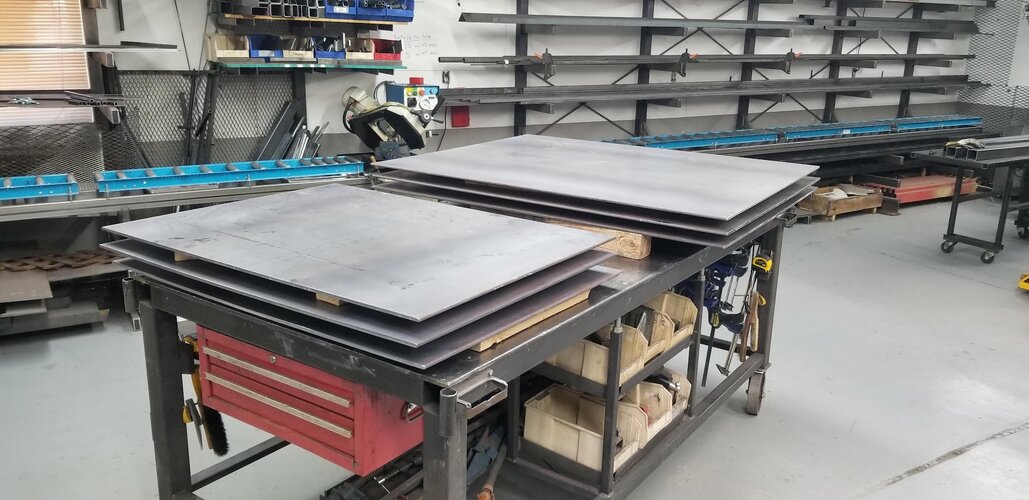
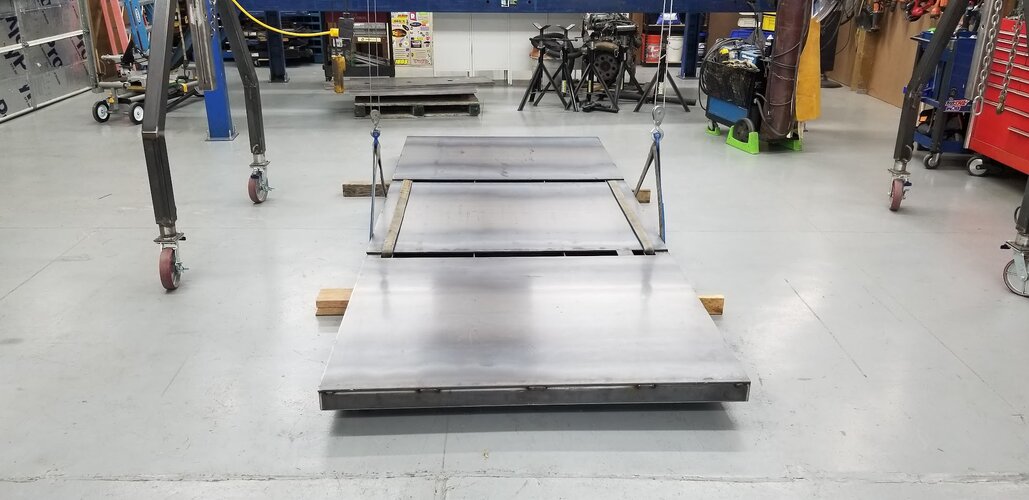
Here are the plates after being processed. Still have 3 nice sized drops left over for add to inventory!

20260219_113121.jpg
 
Last edited:
Brucker

Hard Core 4+
Joined
Jul 10, 2013
Messages
1,125
Location
Broomfield, CO
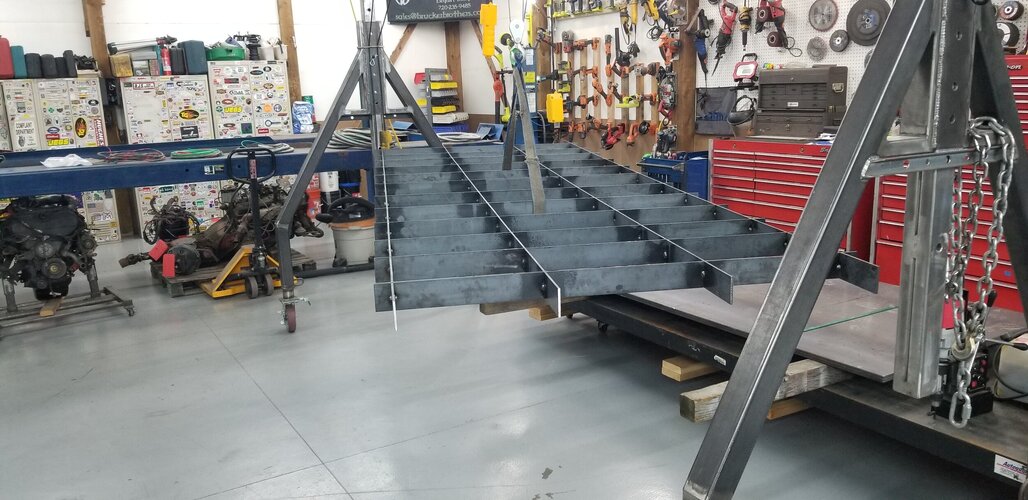
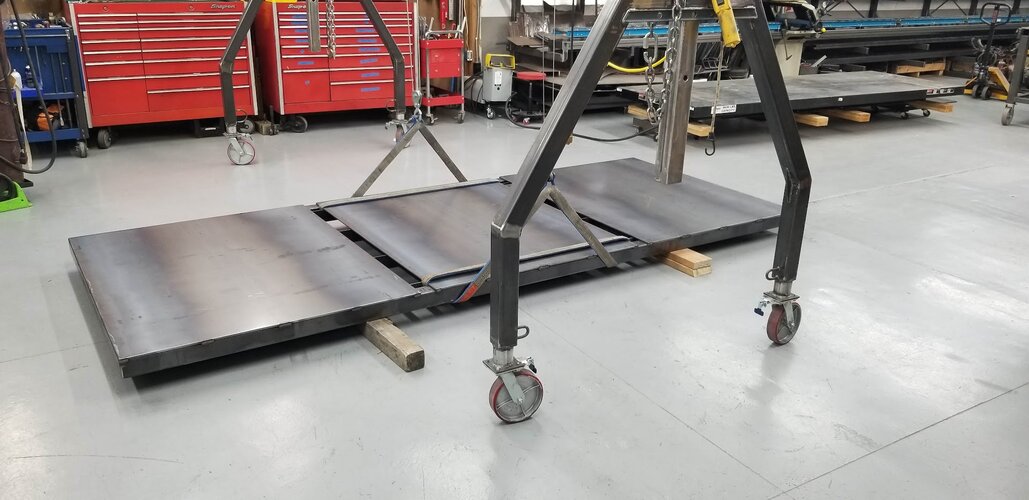
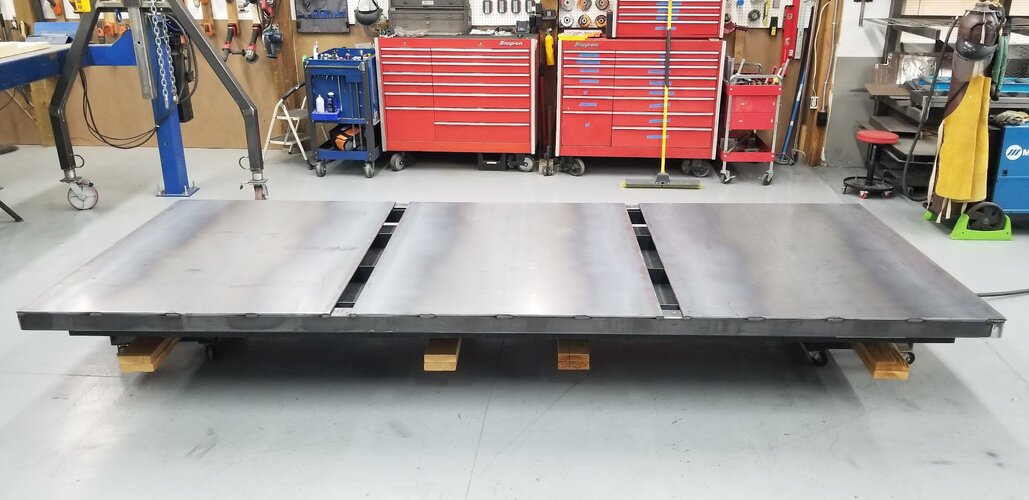
Laid the plates out face down and added the frame on top. Aligned and properly spaced them and then got them welded up. Then welded up the additional rectangular tubing to one end.

20260310_161631.jpg

20260310_161656.jpg

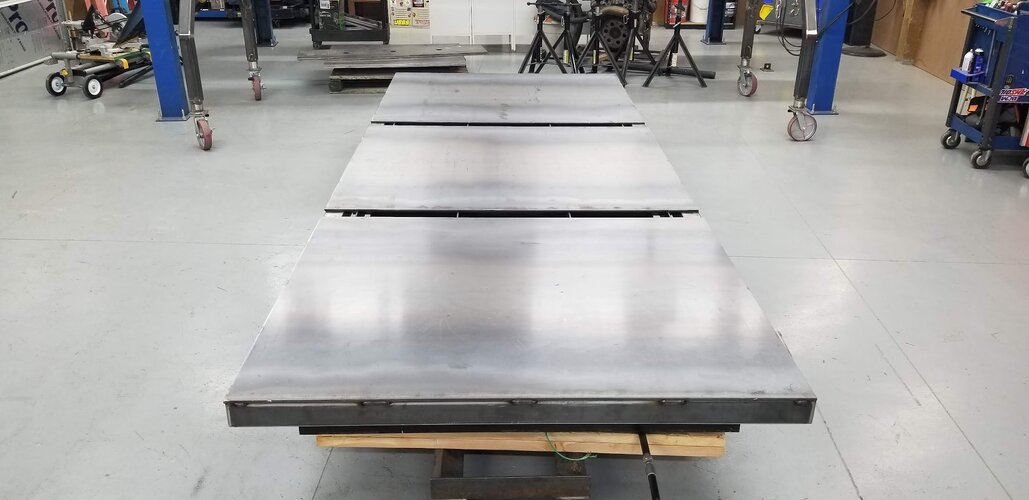
Once welding was complete and flatness was verified, I used the gantry crane to remove the new assembly from the table and flipped it back over.

20260418_113545.jpg

20260418_113535.jpg

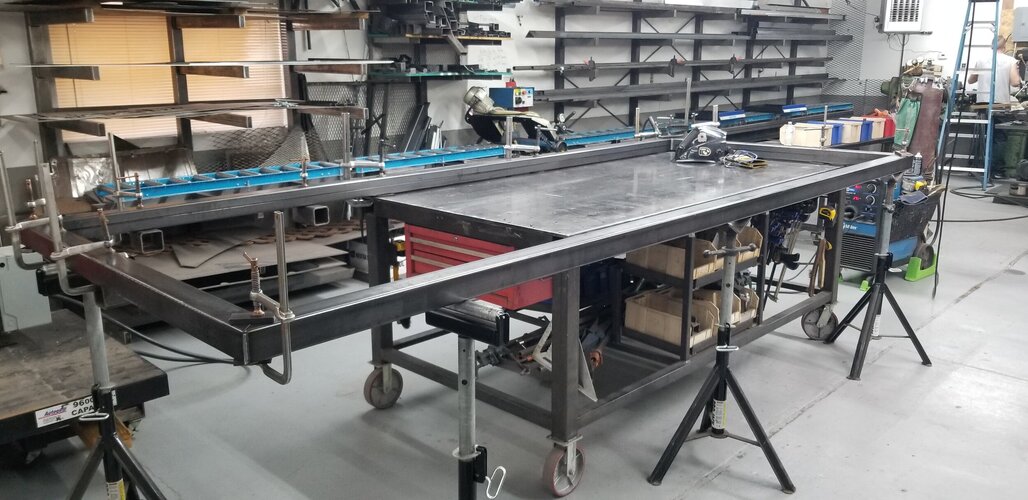
Then added some mounts made out of angle iron to the bottom of the top. These will mount the top to the scissor lift table. then drilled and tapped the table to accept the new mounts. And got the top mounted to the table:

20260418_120428.jpg

20260418_120445.jpg

20260418_210641.jpg
 

Brucker

Hard Core 4+
Joined
Jul 10, 2013
Messages
1,125
Location
Broomfield, CO
Time to fill the gaps.

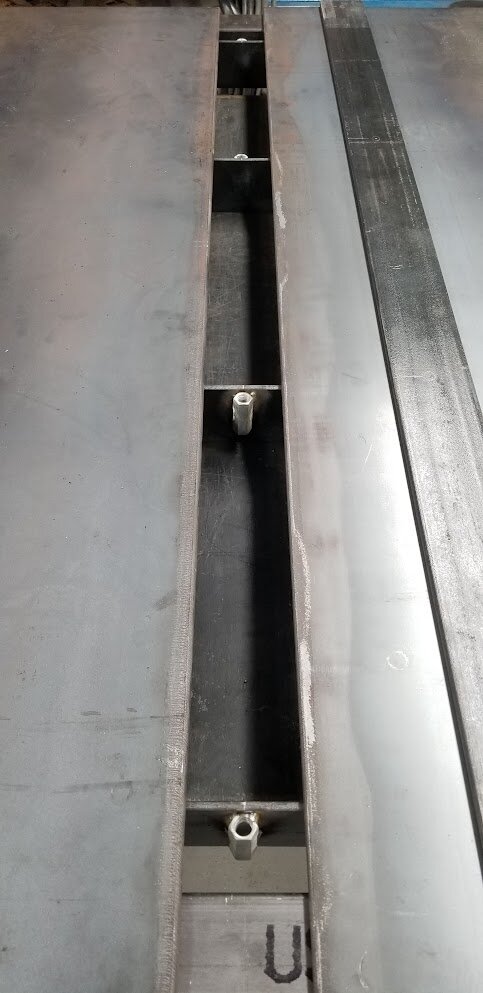
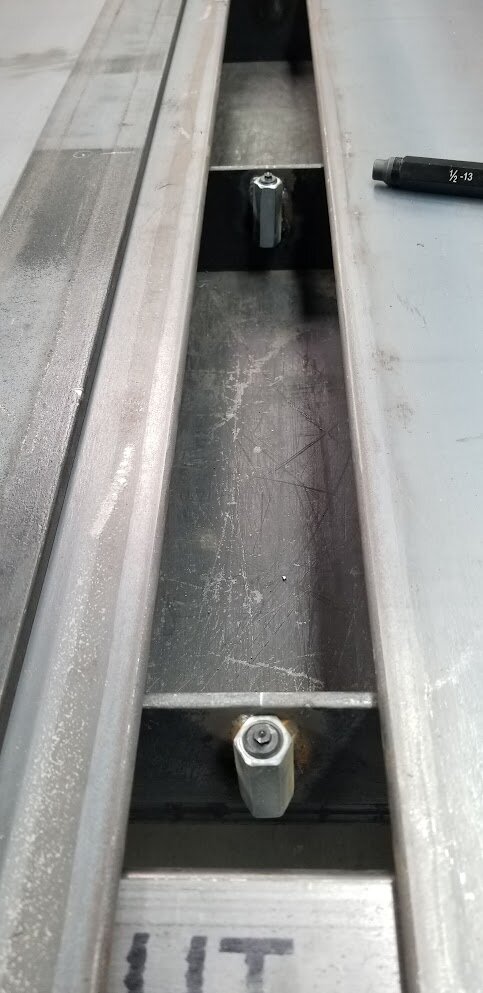
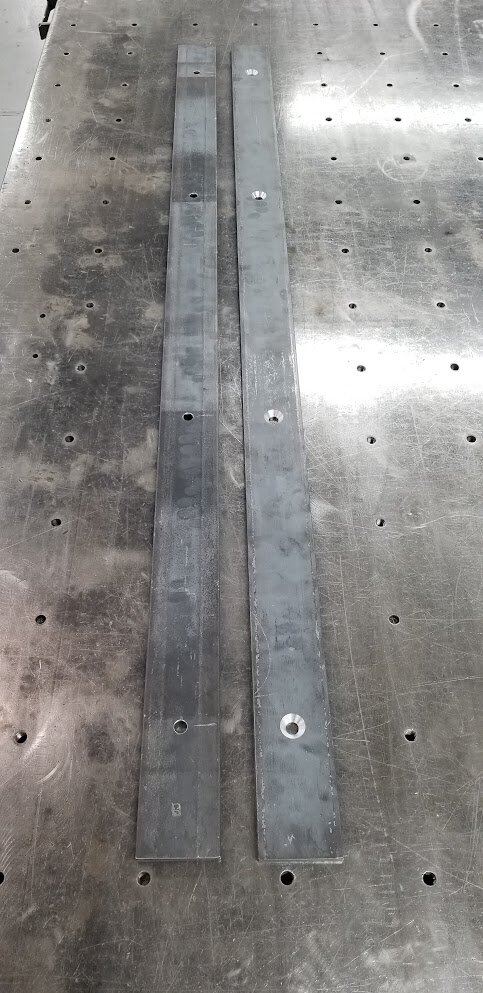
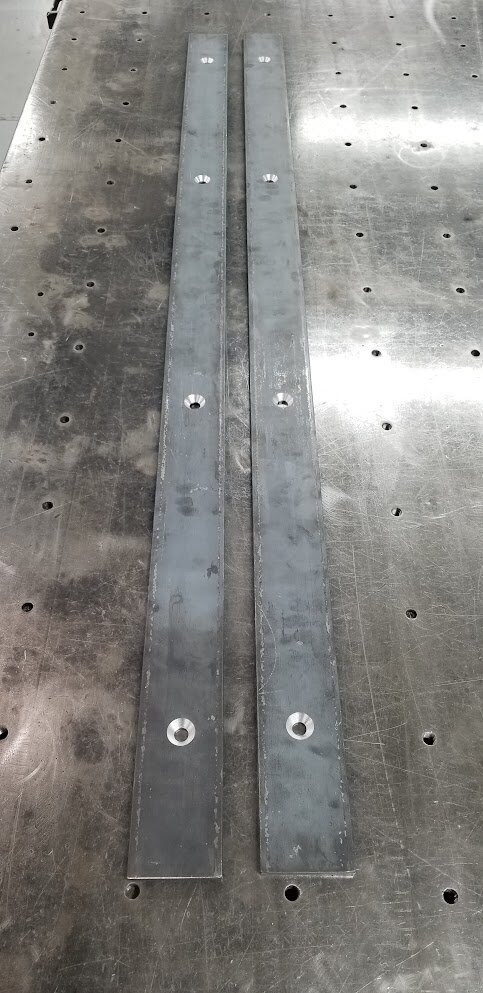
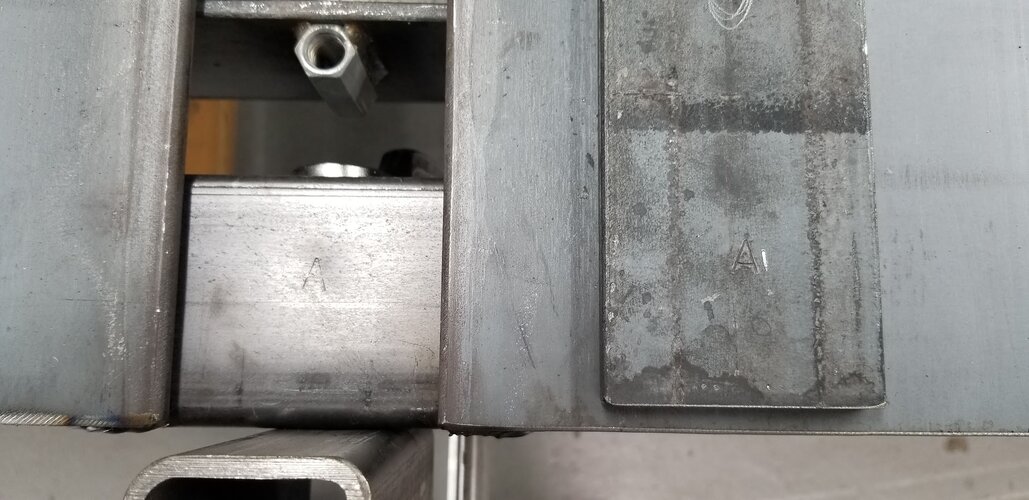
Cut 2 pieces of 3/8" x 3" flat stock to length and cleaned them up. Then added 4 coupling nuts into each void by welding them into position.

20260430_144901.jpg

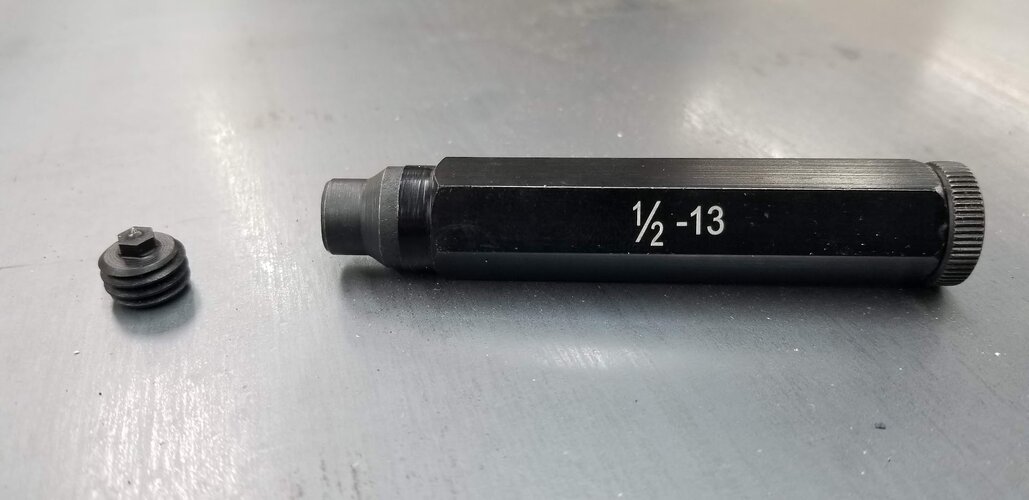
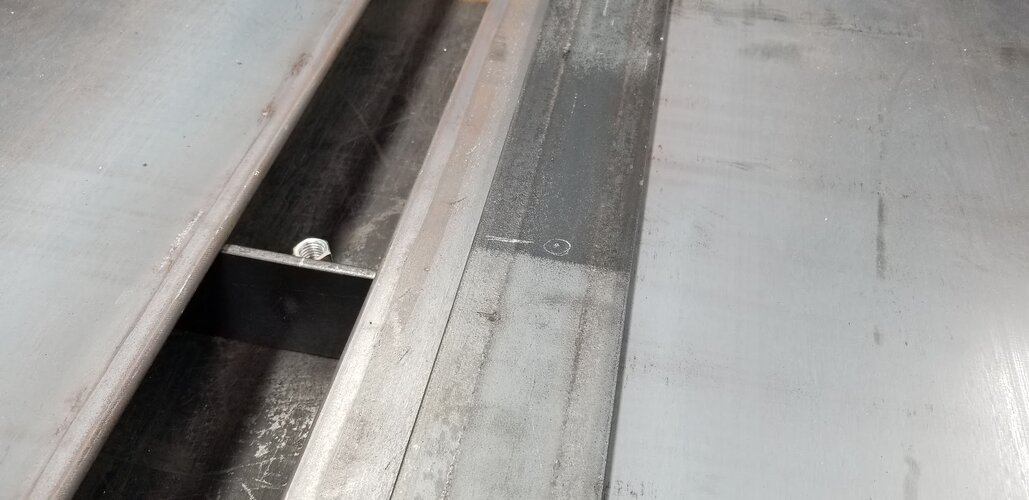
Then used some transfer screws to mark the center of each coupling nut onto the flat stock pieces

20260430_144947.jpg

20260430_144927.jpg

20260430_151334.jpg

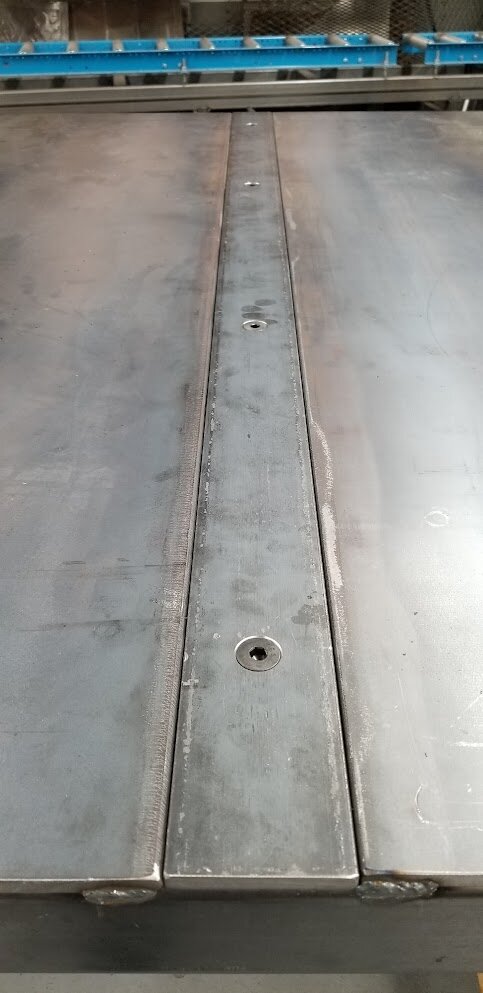
Then drilled and countersunk the holes in the flat stock

20260430_163148.jpg

20260430_163121.jpg

Stamped identifying labels to keep the in the correct location and orientation

20260430_145144.jpg

And installed them

20260430_164226.jpg

20260430_164218.jpg

20260430_164200.jpg

20260430_164254.jpg
 
Last edited:
Brucker

Hard Core 4+
Joined
Jul 10, 2013
Messages
1,125
Location
Broomfield, CO
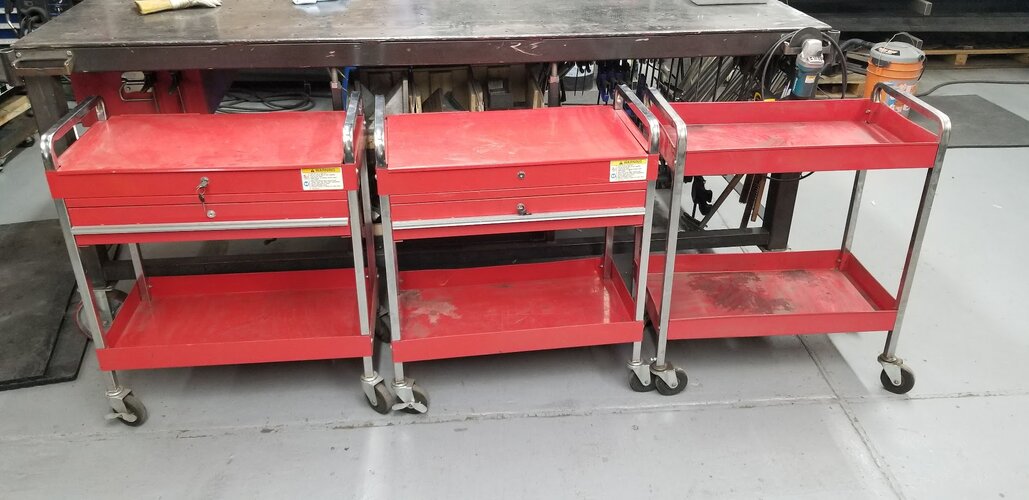
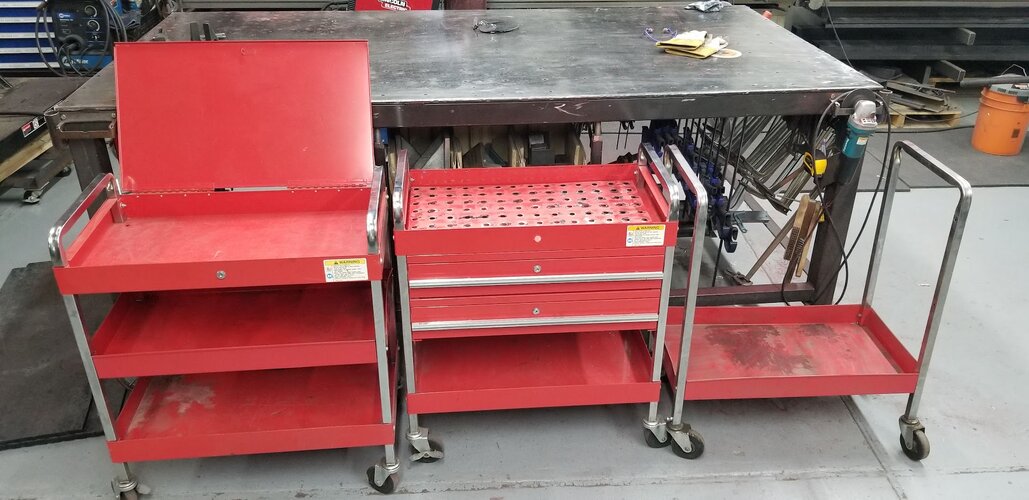
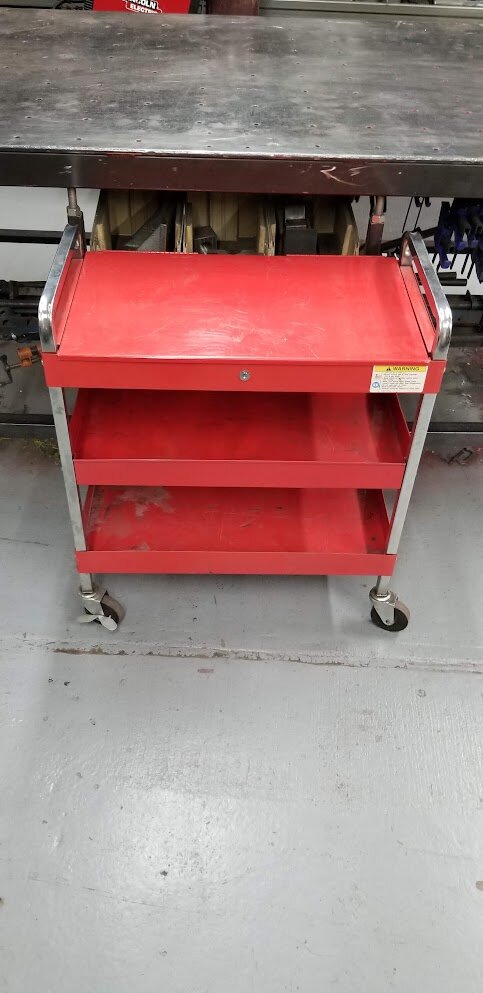
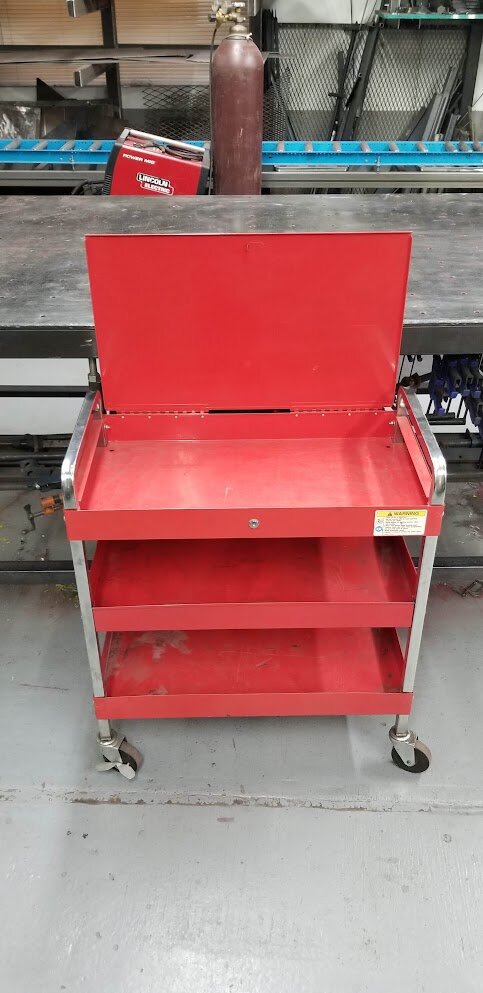
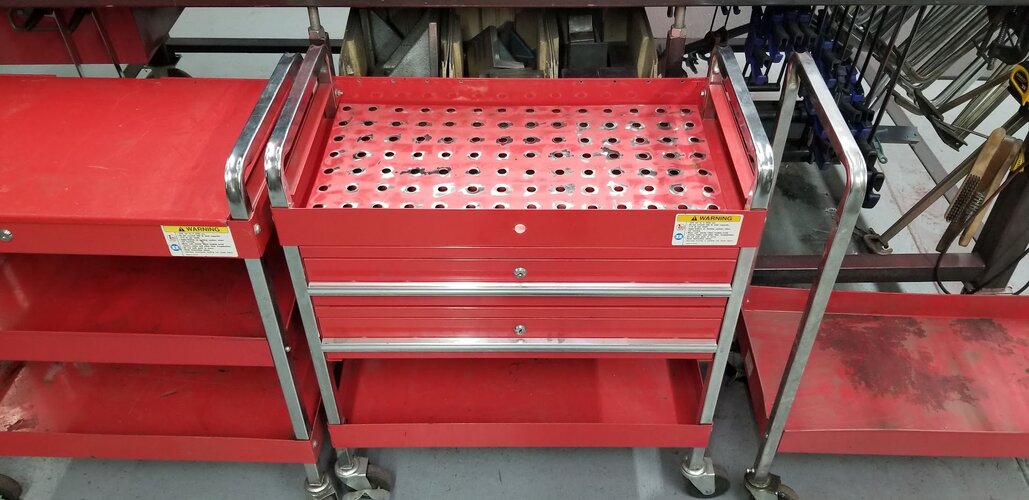
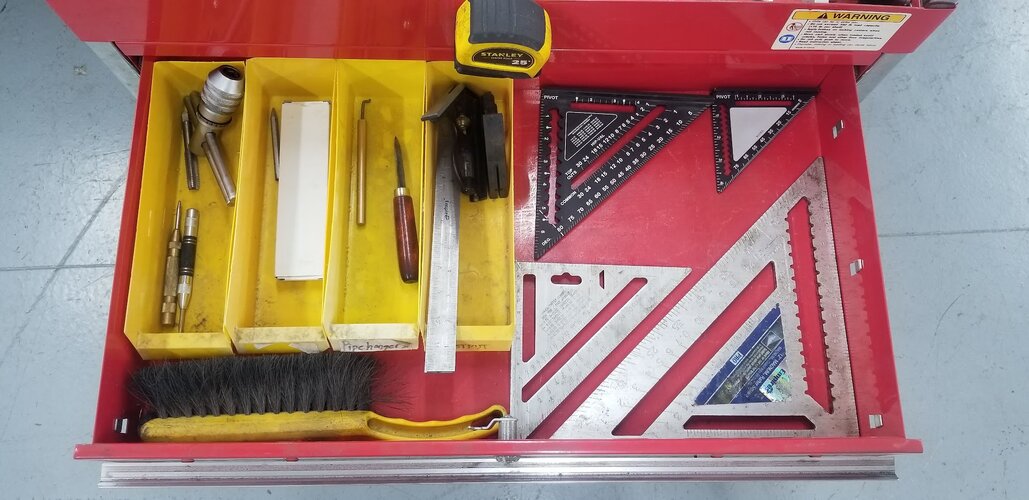
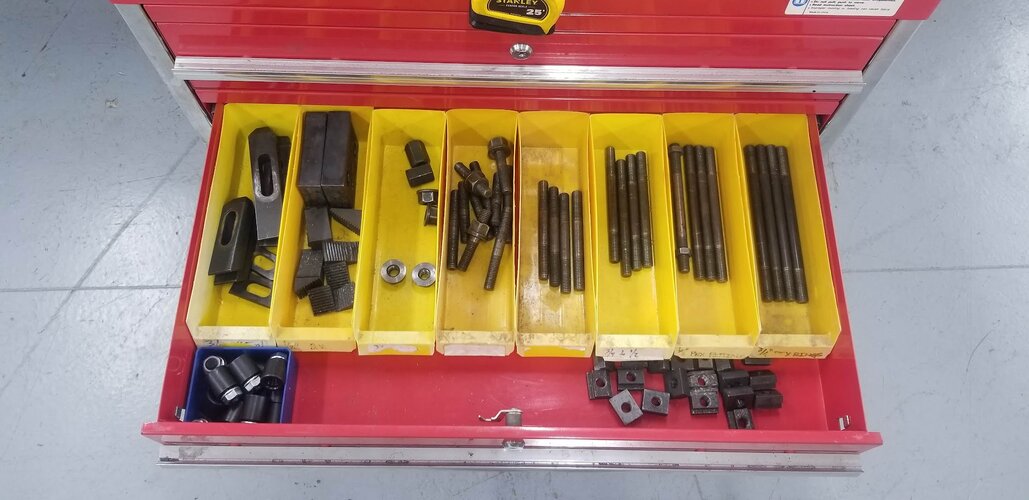
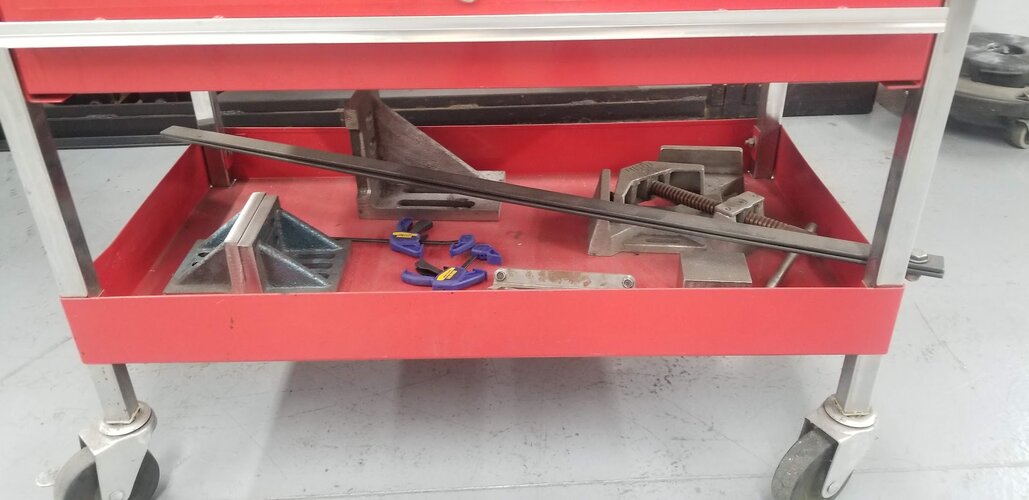
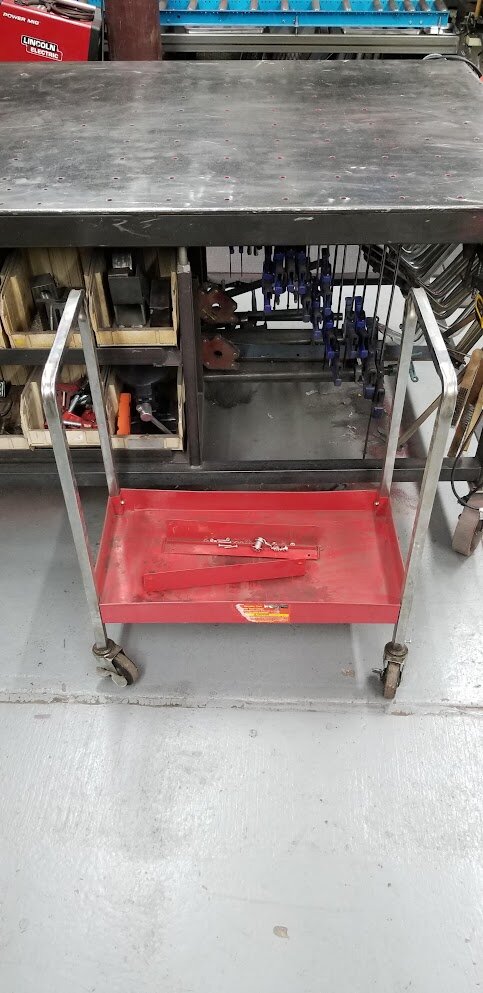
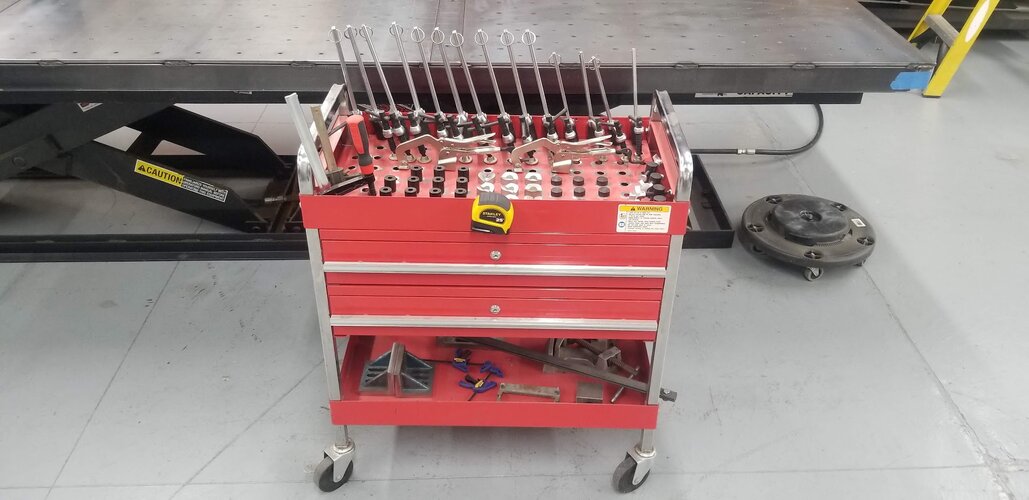
Thought I'd procrastinate a bit before laying out and drilling all of the needed holes. By now you have probably come to realize that my old table has plenty of storage for clamps, layout tools, and other assorted items. And that the new table will not offer any storage solutions. So I decided I should put together a cart that can hold the entire assortment of associated tooling. I've had 3 old school Harbor Freight carts rolling around the shop since I bought them new back in 2002. One is pretty hammered, but 2 are still in decent shape. Figure I can make two good carts out of the three. One to serve as the clamp cart, and one to have around as another misc shop cart. So that's what I did.

The 3 carts in question:
20251231_110513.jpg

And what they turned into:

20251231_160241.jpg

First the misc shop cart:

20260101_145813.jpg

20260101_145823.jpg

And the clamp cart:

20251231_160221.jpg

20260513_111033.jpg

20260513_111216.jpg

20260513_111050.jpg

20260513_111041.jpg

And the scrap:

20260101_145859.jpg

More will get added to the clamp cart as time goes on, but this should be a good start.
 

Brucker

Hard Core 4+
Joined
Jul 10, 2013
Messages
1,125
Location
Broomfield, CO
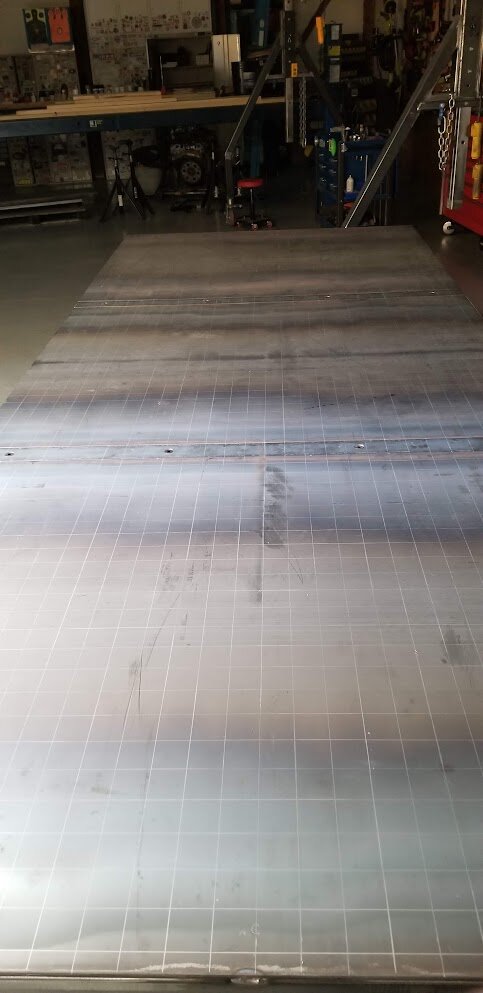
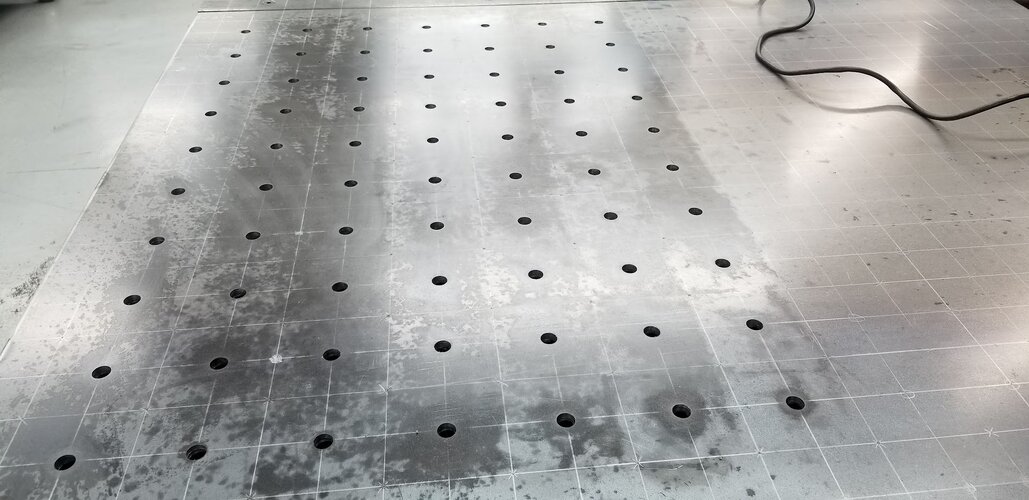
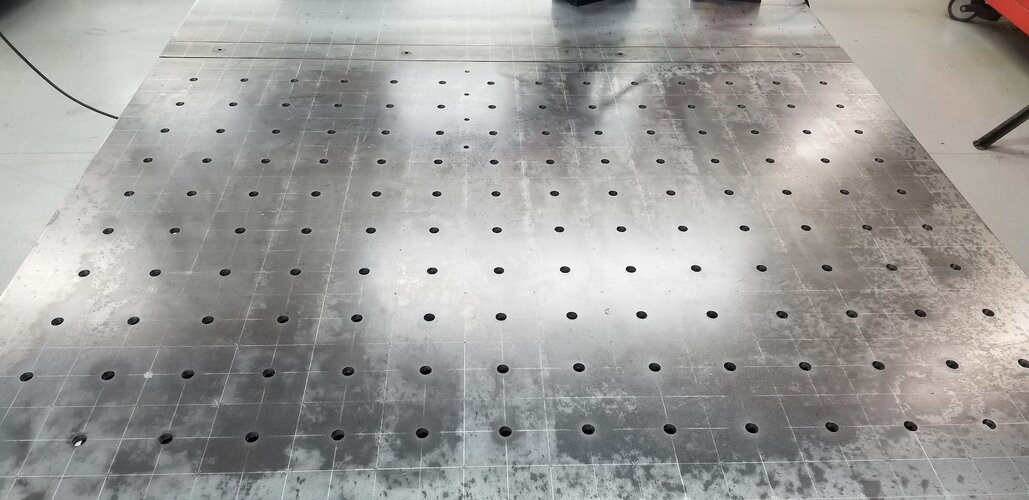
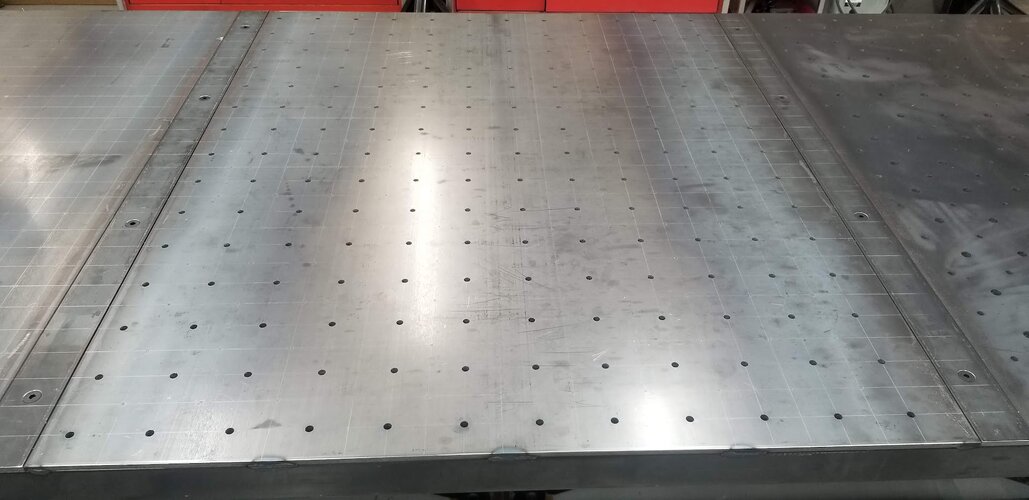
Laying out the 2 opposing 4" x 4" grid patterns was a daunting and tedious task. I was going to have a sheet printed in vinyl that I could stick on top of the table and drill through. But I got impatient and started laying it all out manually. I happen to have a couple 12' straight edges and a couple 8' levels, so I used them in combination to layout the grid patterns. I used a center punch and marked each hole. Then quickly realized that there was a downside to all the new LED shop lighting I just installed. It is actually too bright and creates a glare, where quickly finding the center punch marks was actually difficult. So I went back and drew the grid lines with a silver pencil. I will admit, I did this in haste, so I didn't get the lines perfect. Though this shouldn't matter as long as I drill at the center punch marks and not where the pencil lines intercept. Then marked each hole location for which sized hole it got.

A look at the grid work:

20260502_174836.jpg

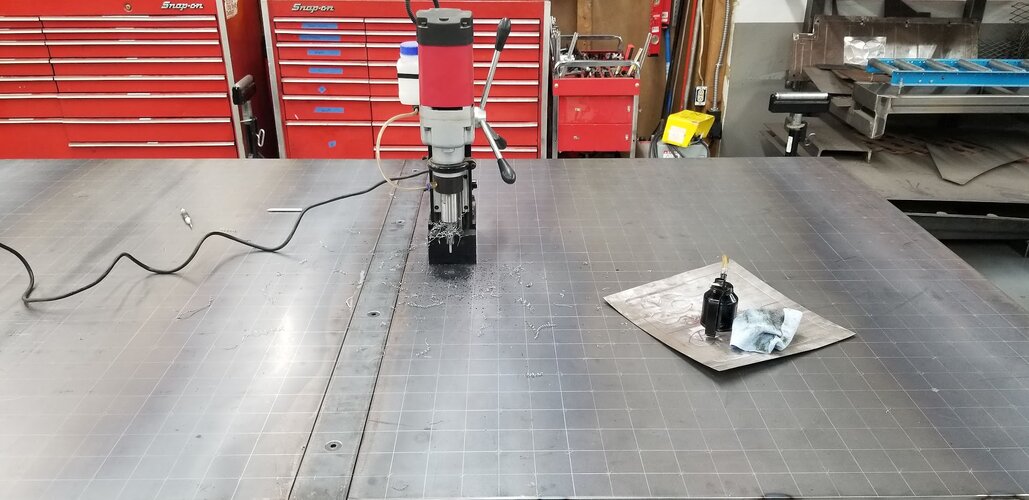
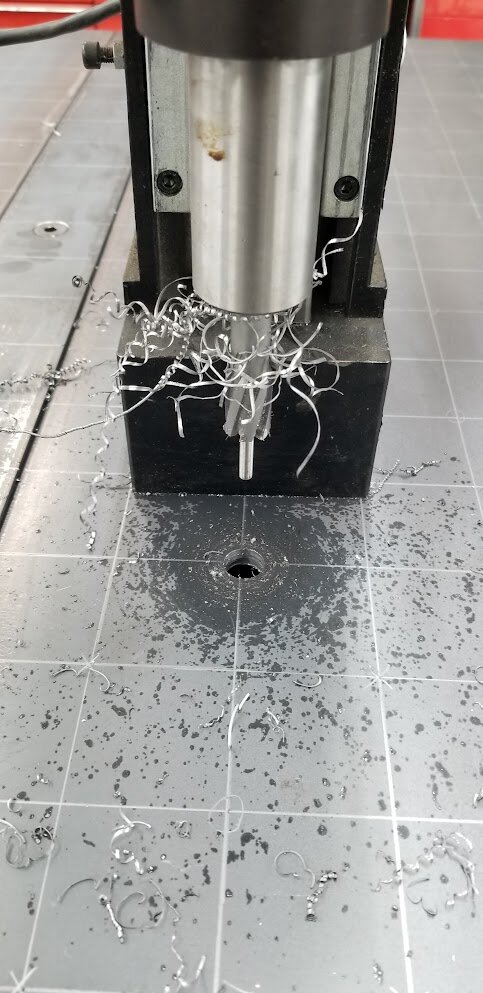
Only thing left to do was load up the mag drills with the correct annular cutters, a 16mm and a 27/64". Then popped the first hole through:

20260507_174451.jpg

20260507_174457.jpg

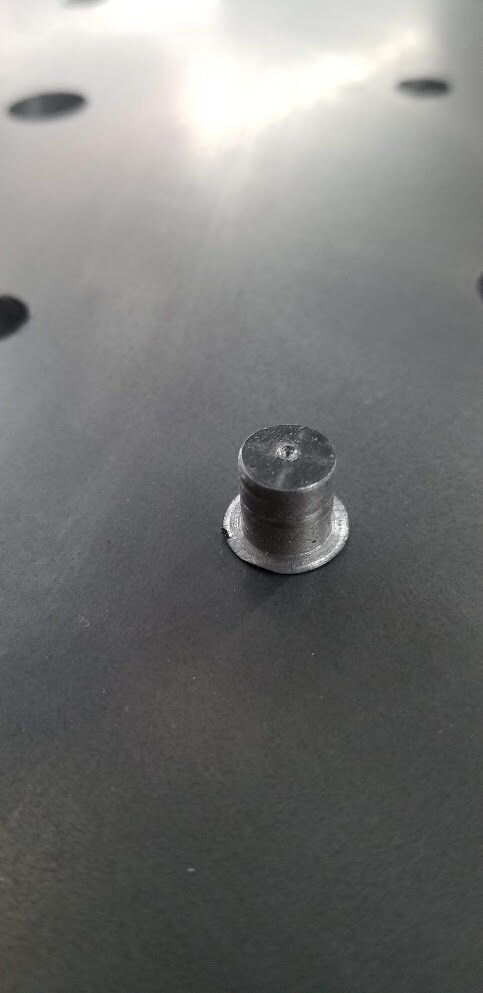
And the slug that's left:

20260513_110756.jpg

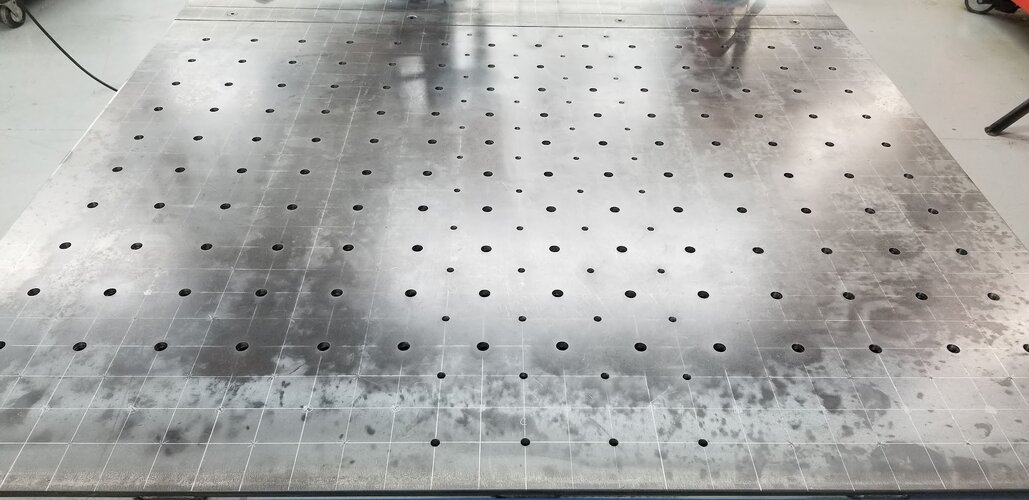
I drilled 16mm holes till I finished a 1/3 of the table, then switched to the smaller size:

20260508_180303.jpg

20260509_165208.jpg

20260509_183044.jpg

And actually completed 1/3 of the required holes before giving up for the night. You will notice I left a gap in the grid work toward the end of the table. This line of holes falls on the side of the support tube under the plate. So for now, I am not going to drill them as there is plenty of options for a different type of clamp in that area.

20260510_171324.jpg

20260510_171314.jpg

697792547_1628644042121728_115575870402243456_n.jpg

20260509_183056.jpg
 

Brucker

Hard Core 4+
Joined
Jul 10, 2013
Messages
1,125
Location
Broomfield, CO
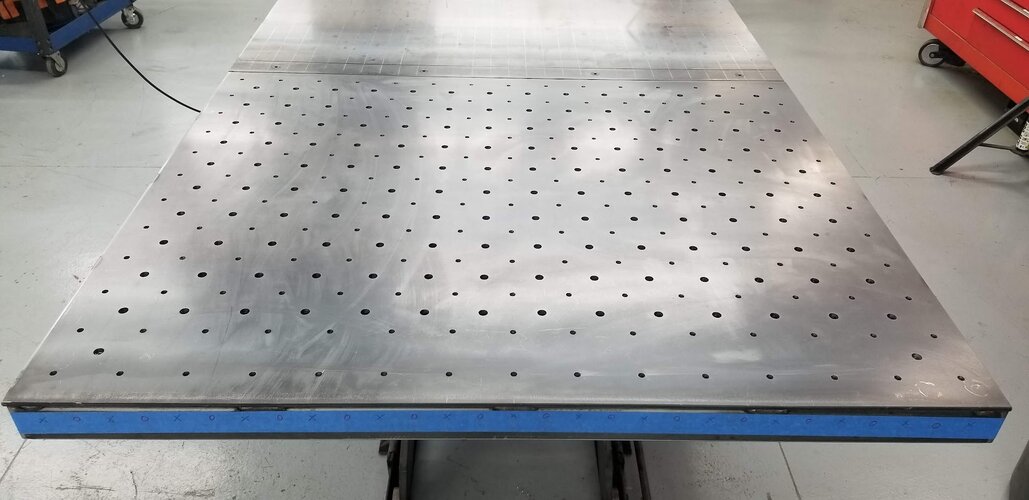
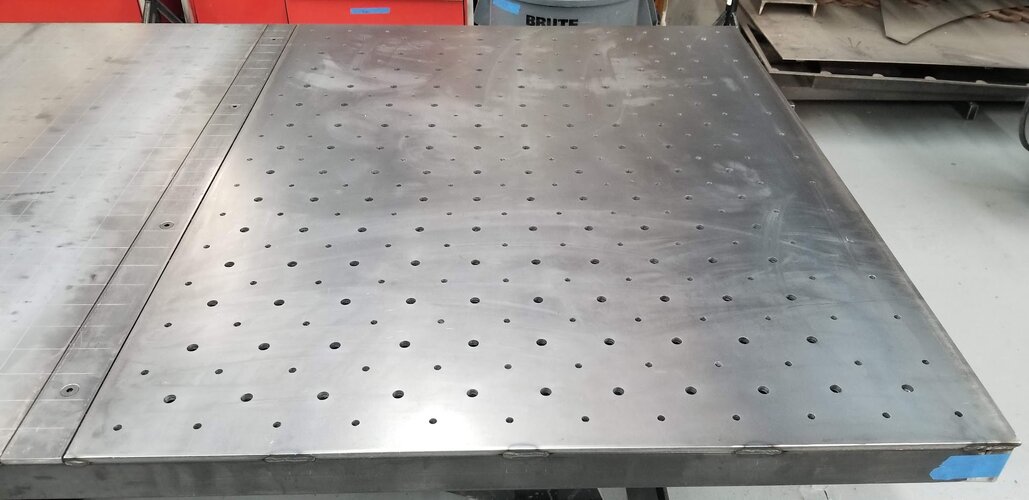
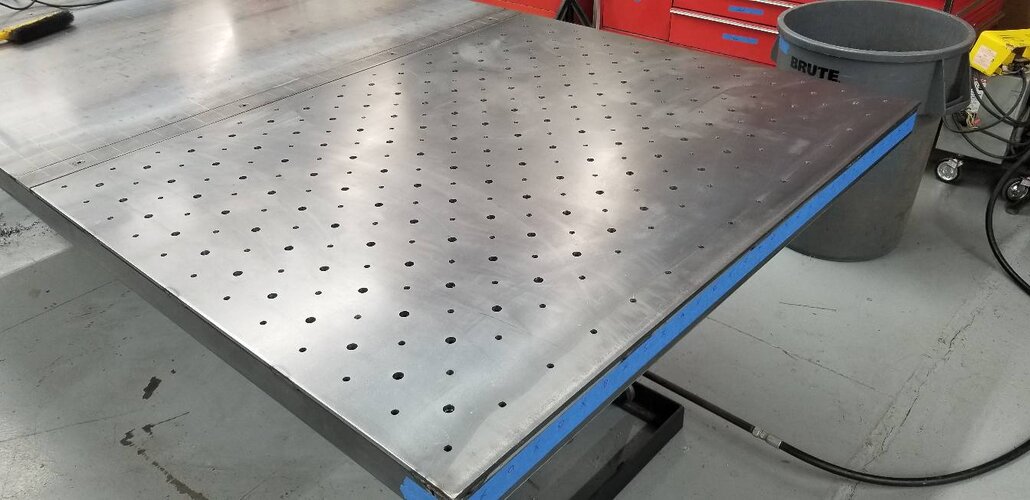
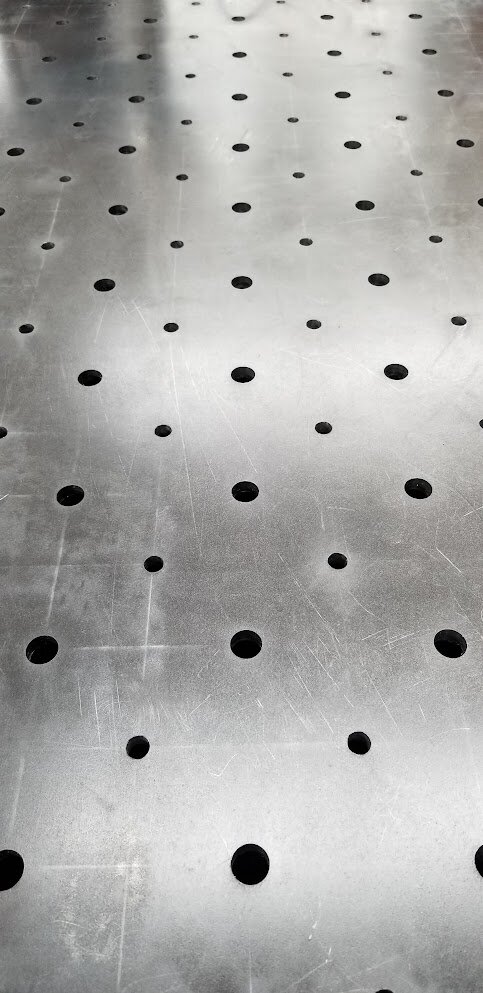
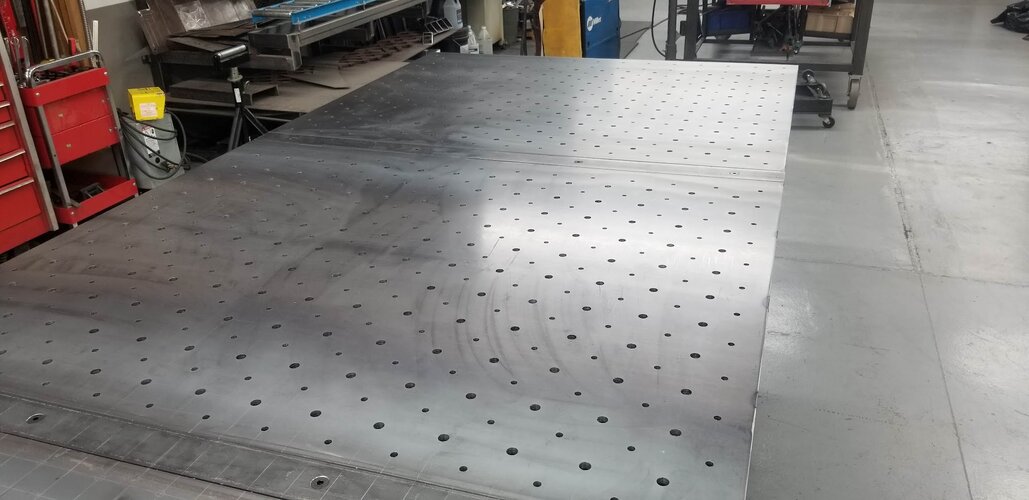
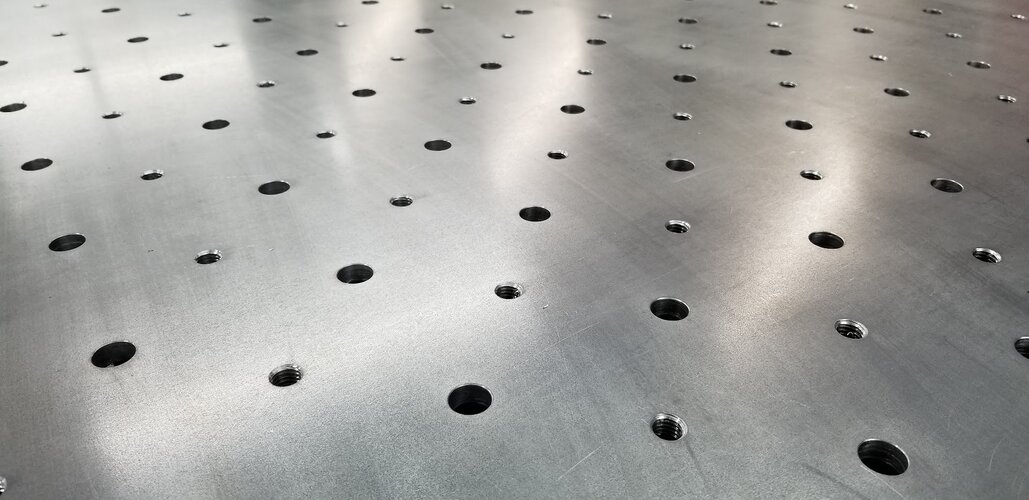
Drilling is done and everything has been chamfered. All 990 holes. Looking fairly decent.

20260516_122658.jpg

20260516_122718.jpg

20260516_122709.jpg

20260516_122736.jpg

20260516_122813.jpg

20260516_122822.jpg

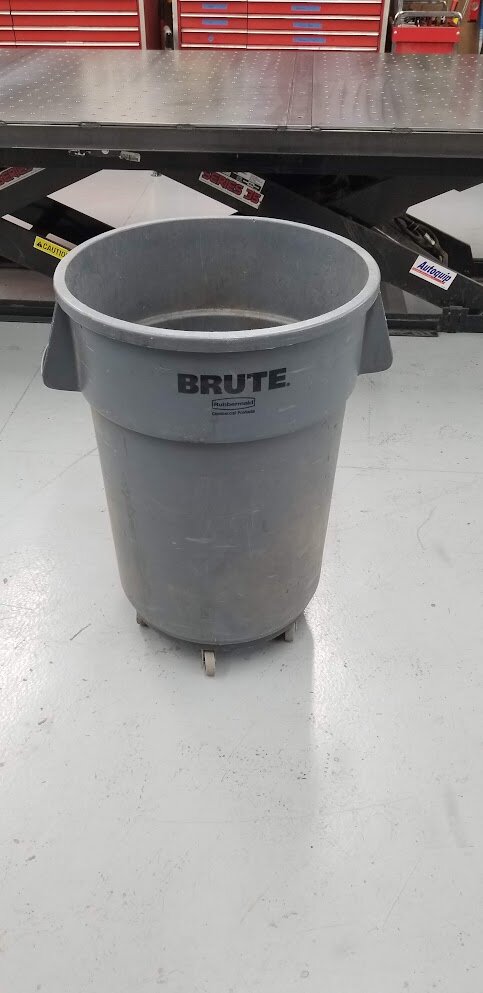
I knew this would create a decent amount of chips, but was curious as to how much. I guessed the highest, saying the waste would fill at least half of a trash bin. Anyone else care to guess? Said trash bin:

20260516_125439.jpg

Just need to tap the 540 smaller holes to 1/2"-13 and I can call the first phase of this build complete and put it to work. And hopefully make some accessories for it as well.
 

Brucker

Hard Core 4+
Joined
Jul 10, 2013
Messages
1,125
Location
Broomfield, CO
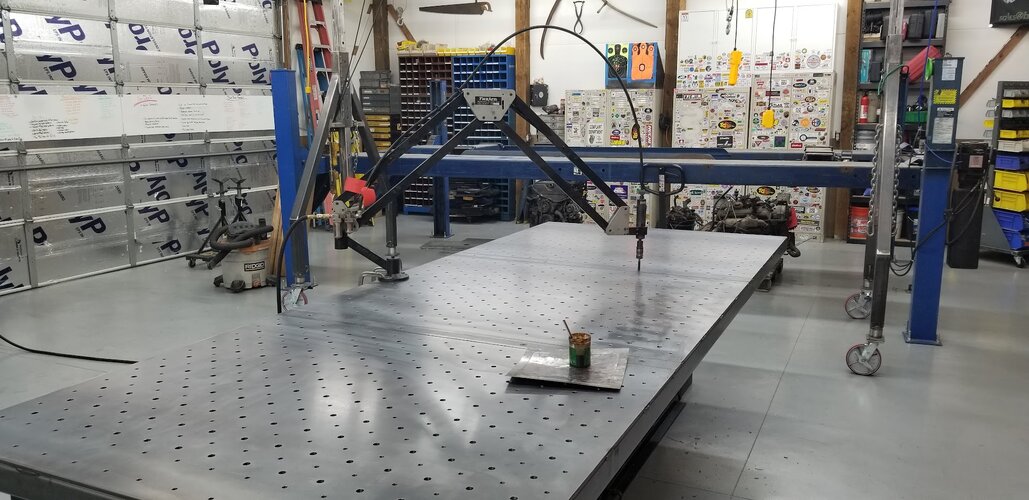
Phase 1 of this table build is complete! Used my trusty old FlexArm tapping arm to easily and quickly tap all of the smaller 540 holes out to 1/2"-13. It has a 72" reach so I was able to access every hole by only repositioning the base once.

20260516_143306.jpg

20260516_150034.jpg

20260516_150014.jpg

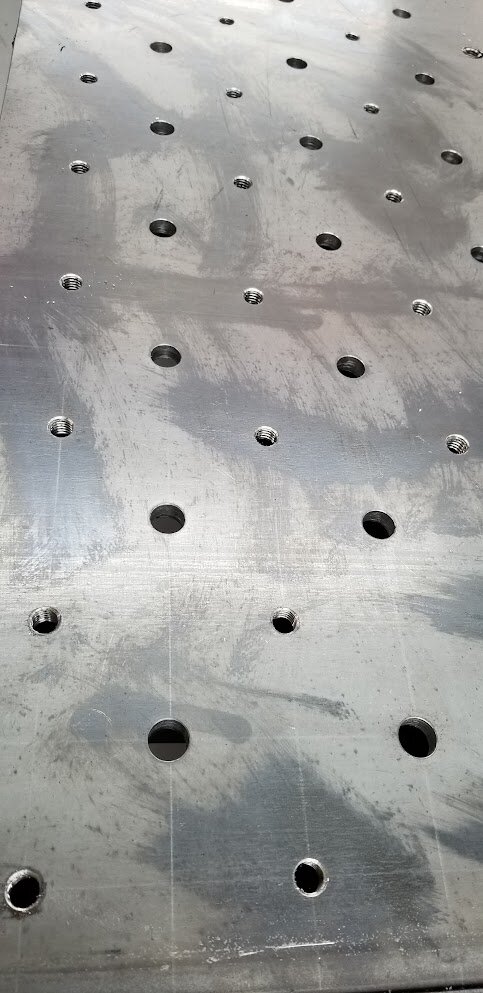
Once that was done, I chamfered all of the threaded holes once again. Then cleaned up the surface.

20260517_141917.jpg

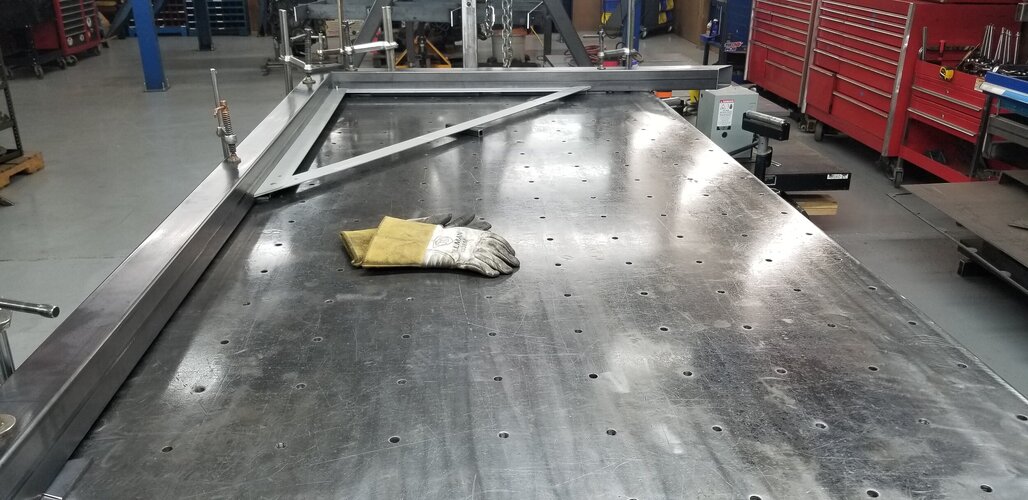
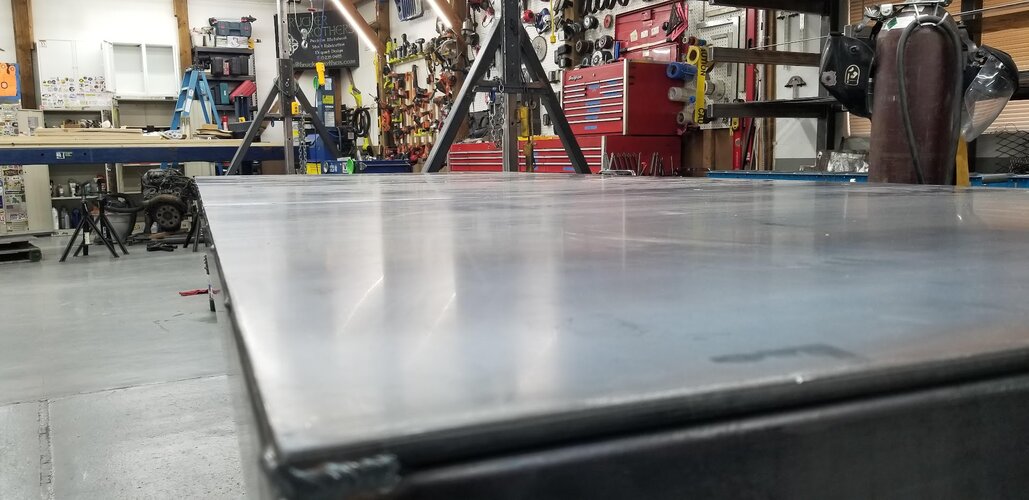
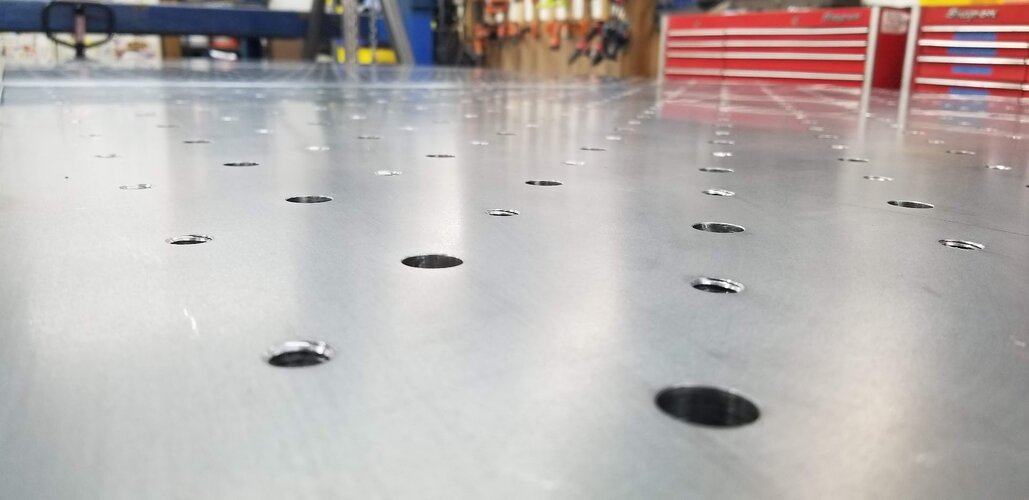
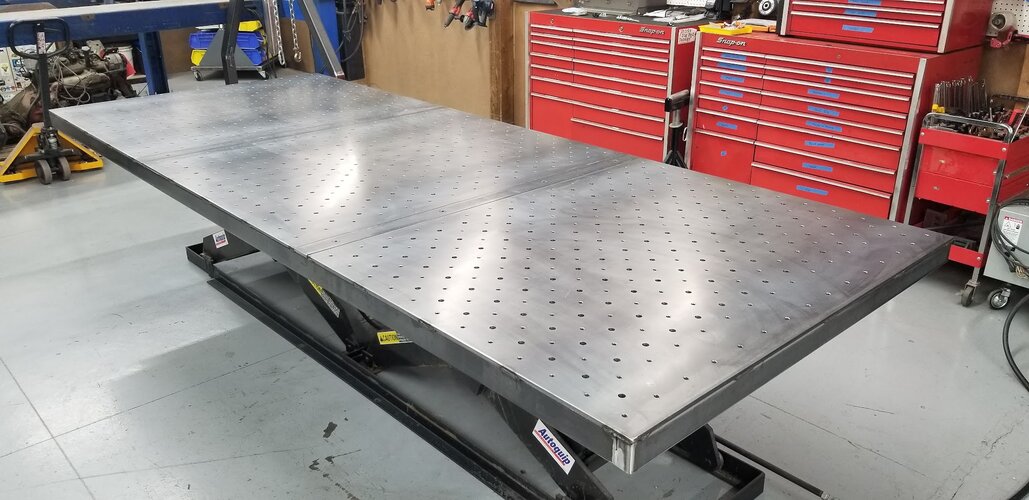
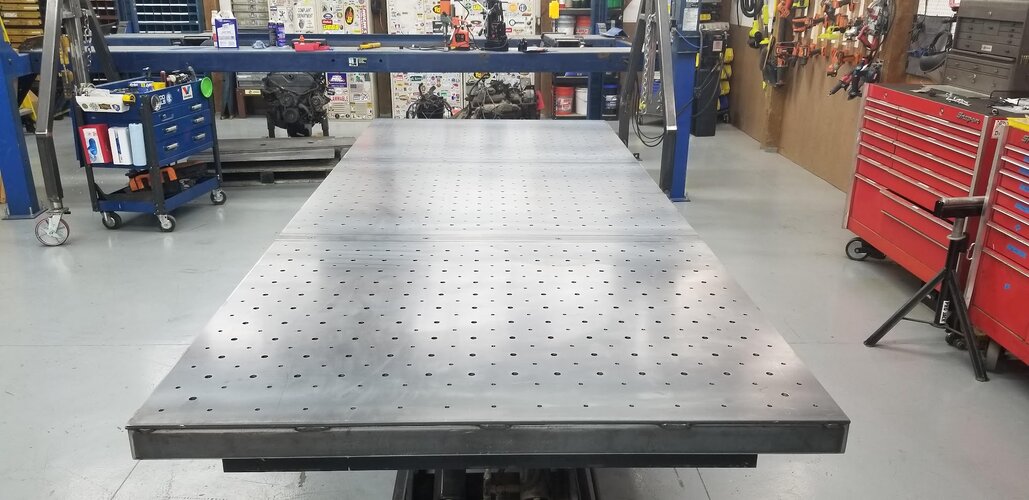
There is nothing quite like a clean, flat work surface.

20260517_141924.jpg

And here are a couple "walk around" videos of the completed table in action:


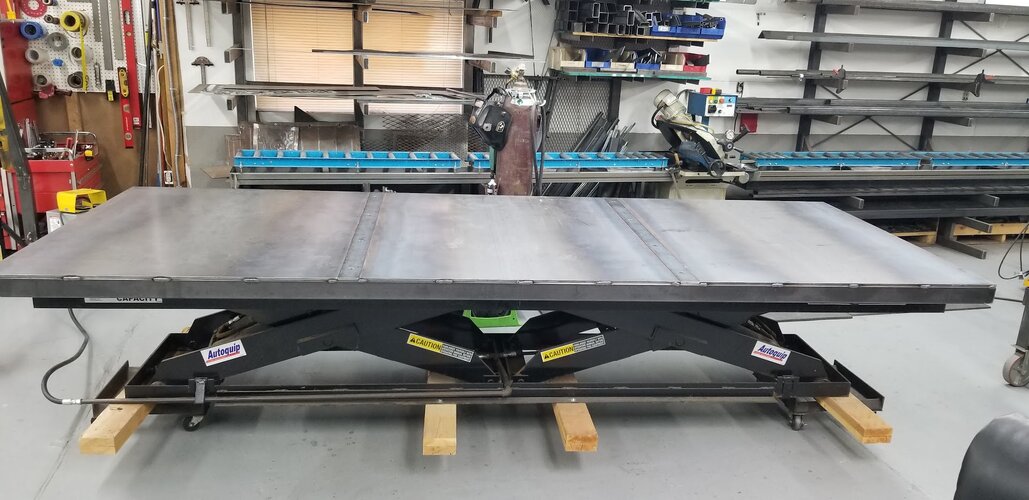
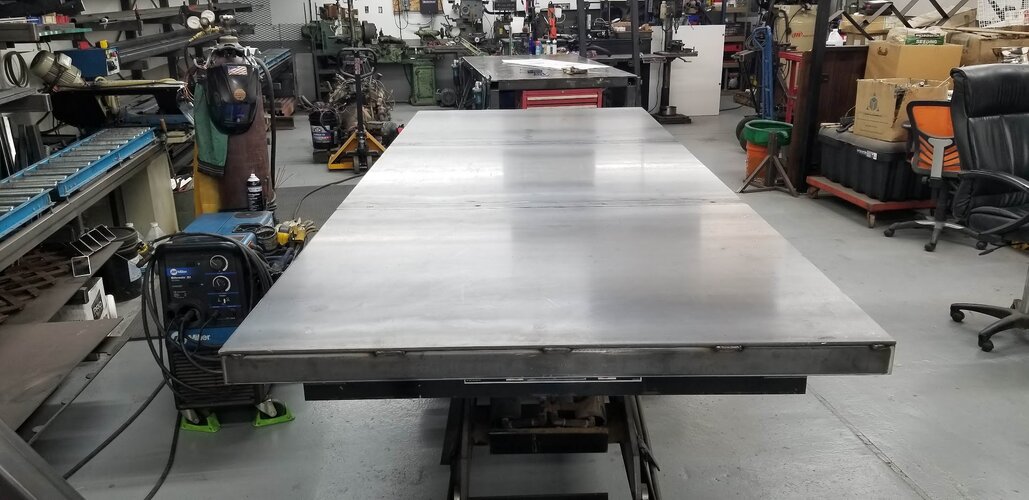
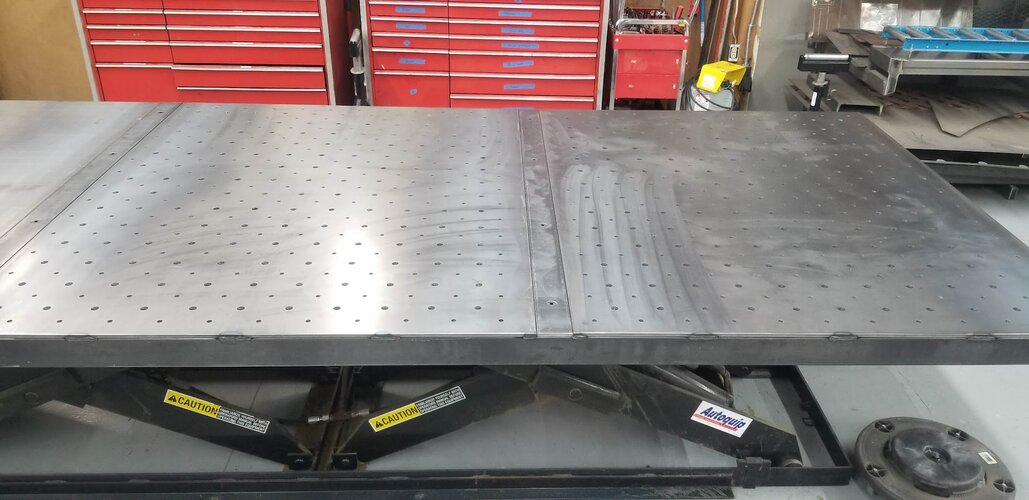
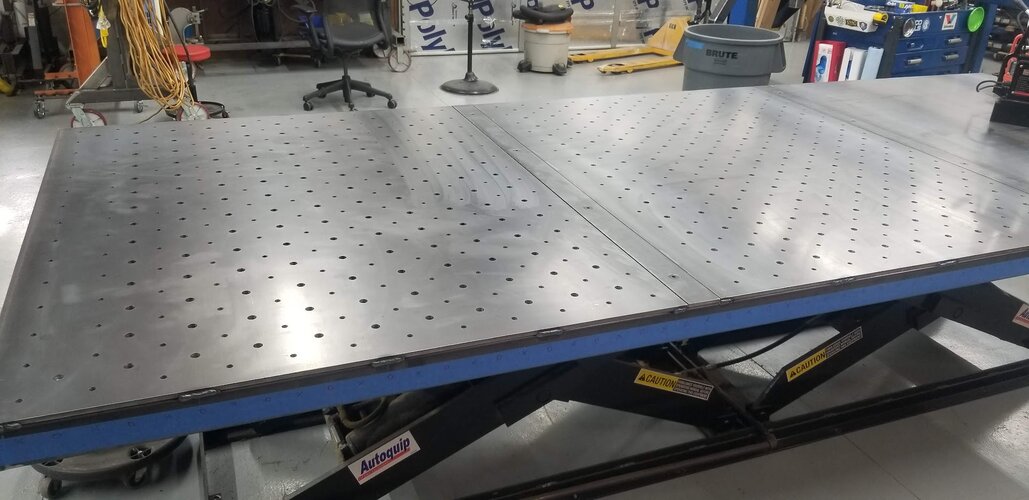
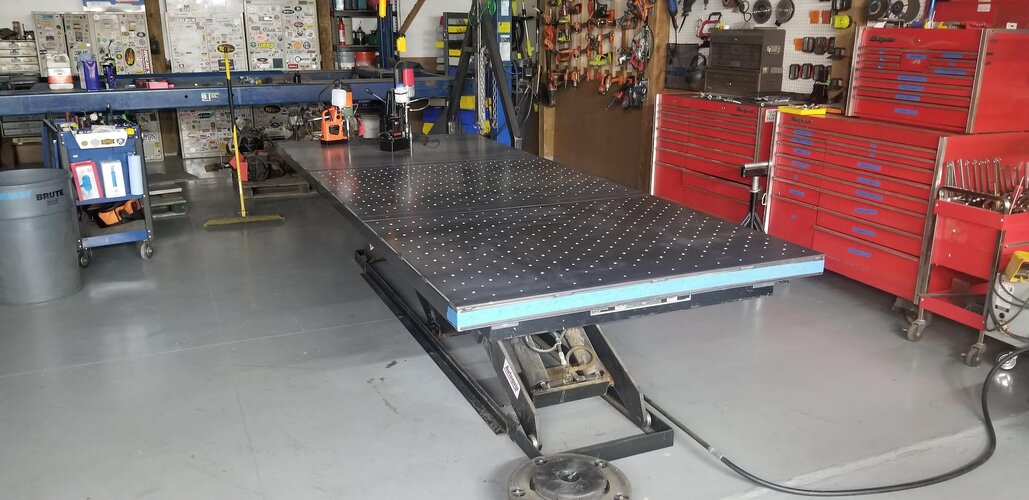
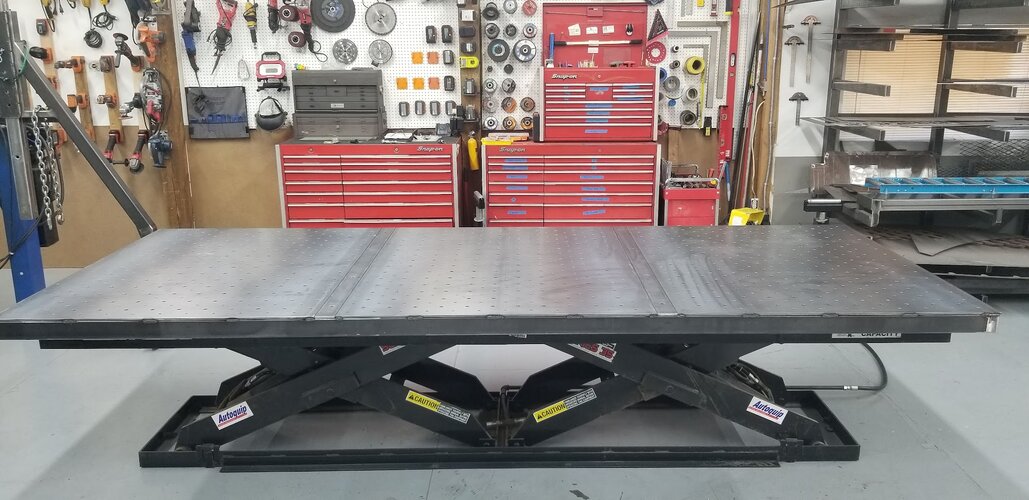
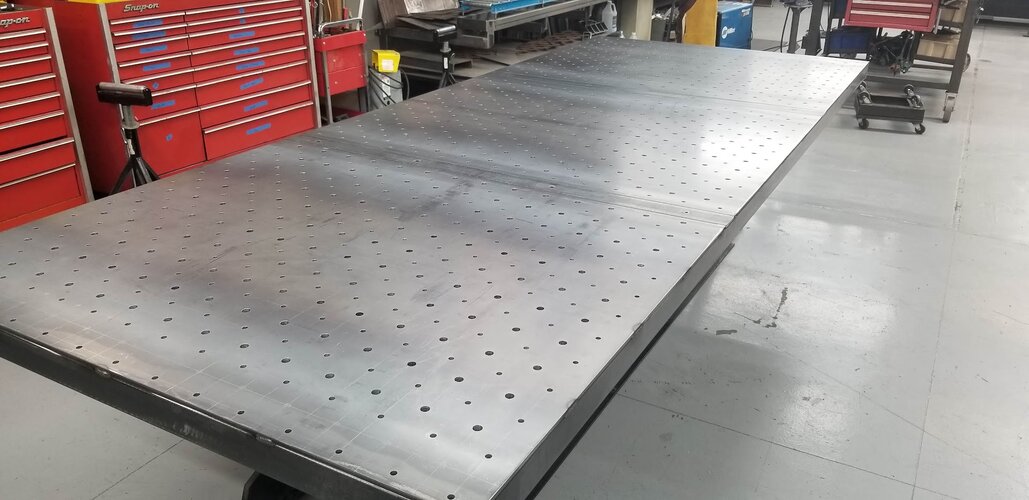
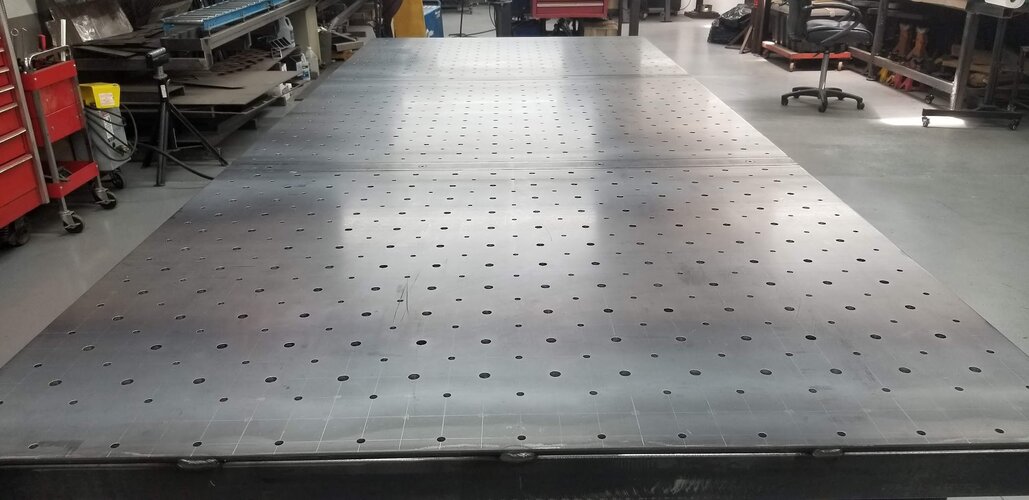
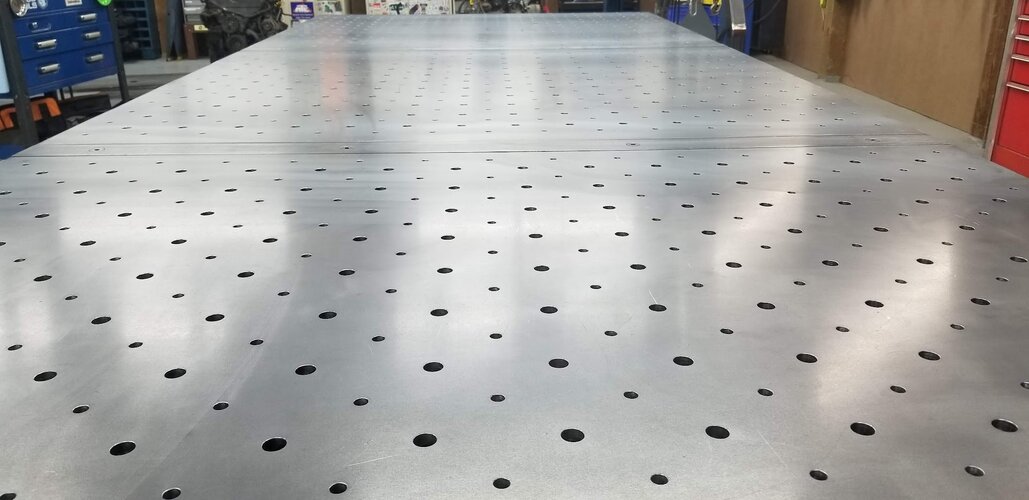
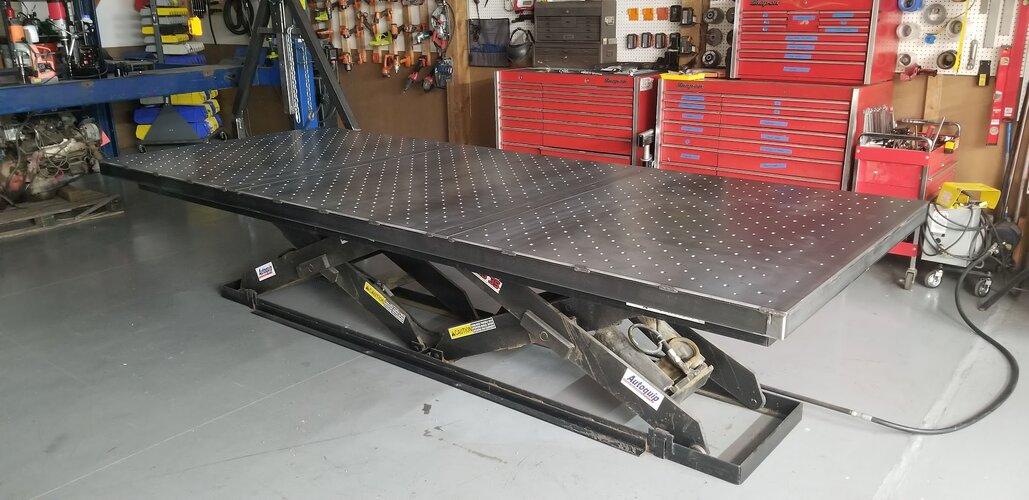
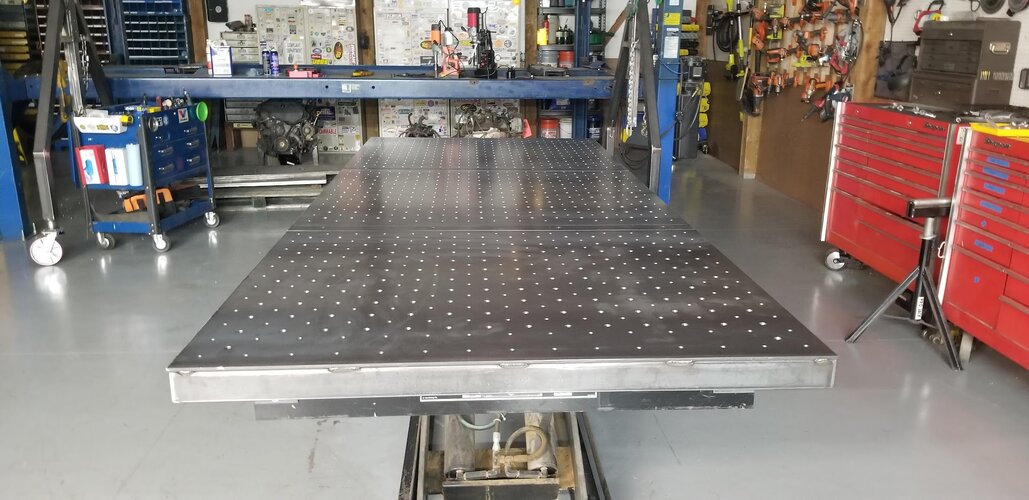
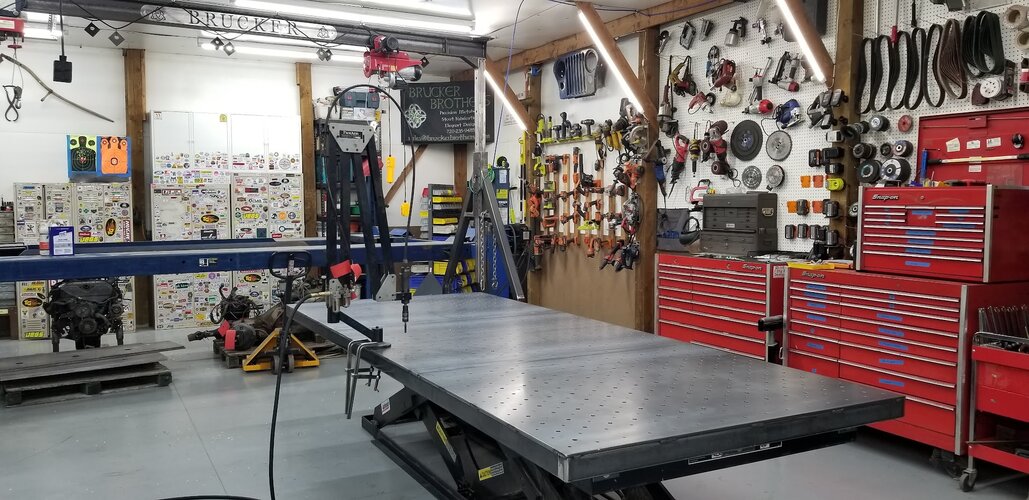
So here is the finished product (of phase 1 at least). My 60" x 151.5" adjustable height fixture table with an 8,000+ pound capacity. Featuring 990 fixture holes with 450 of the being 16mm thru holes for both 5/8" and 16mm tooling and clamps. And the rest being 1/2"-13 threaded holes. The top is only 10" proud when in it's lowest position, and can raise over 50 vertical inches in under 30 seconds.

20260517_141847.jpg

20260517_141835.jpg

20260516_122648.jpg
 
Back
Top